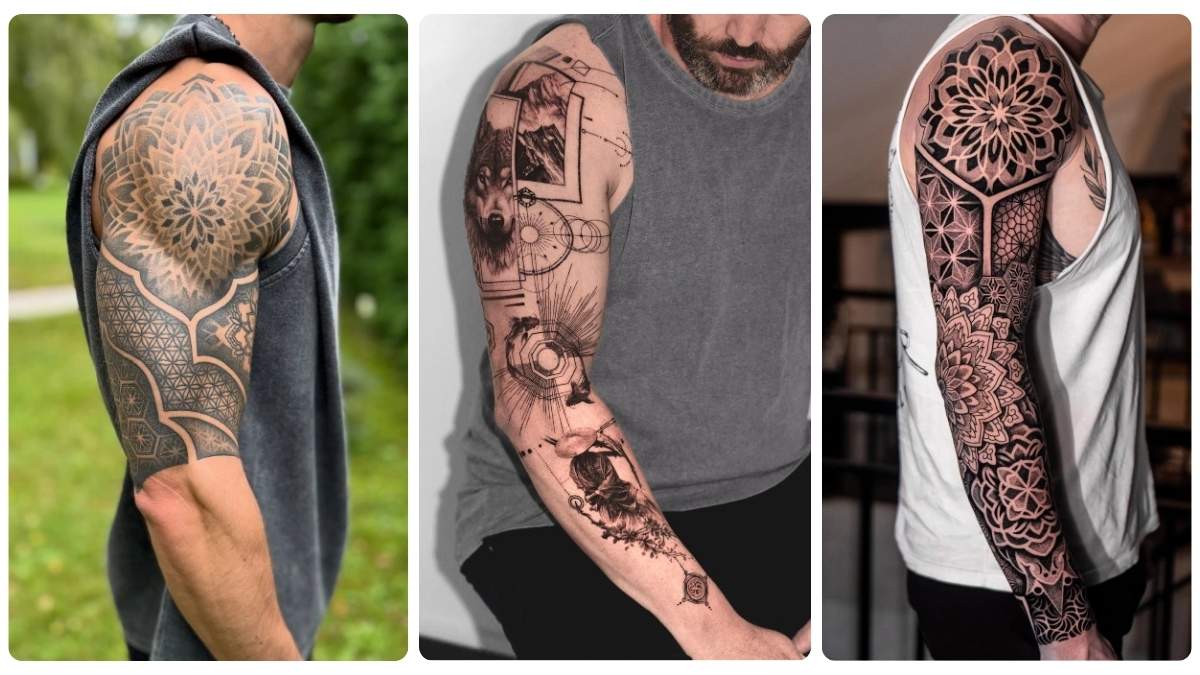
Living with crisp geometric body art feels like inhabiting a modern, well-structured loft. Bold black lines ground your visual space instantly. Sharp angles bring a distinct sense of order to your daily routine.
Minimalist design transfers flawlessly from interior architecture to skin. Men can scale these shapes up for an impactful sleeve or keep them isolated for subtle detail.
Small Space Big Impact Arm Layering Tricks
Treating your arm like a blank gallery wall requires careful, deliberate planning. Negative space matters exactly as much as the heavy black ink.
Wrapping a geometric pattern around the forearm creates continuous, wrap-around visual flow. Bicep placements offer a broader canvas for intricate, symmetrical dot-work.
Sleeve Architecture
Geometric Blackwork
Color Anchor
Solid black geometric shapes ground the entire design and prevent the arm from looking cluttered.
Visual Texture
Stippled shading softens harsh intersecting lines and gives the pattern a deep, multidimensional feel.
Focal Point
Center your heaviest, most detailed mandala on the widest part of your outer bicep.
Placement Formula
Match sharp triangular points to the natural taper of your wrist to naturally elongate the arm.
1. Framed Wildlife and Geometric Sunburst Sleeve
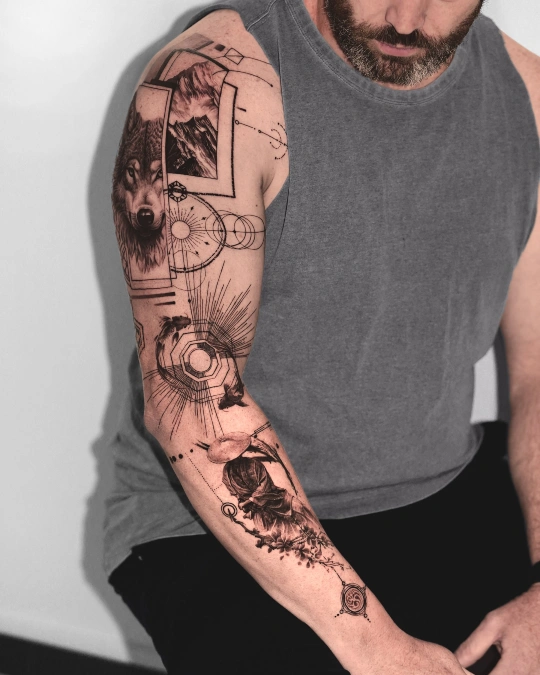
Crisp rectangular frames contain soft, realistic mountain ranges near the shoulder. A finely shaded wolf face anchors the upper bicep with heavy black contrast. Sharp, radiating lines burst from a central geometric core directly over the elbow joint.
Mixing rigid architectural borders with soft organic realism creates high-impact visual tension.
Layering distinct natural scenes within strict geometric borders acts like zoning an open-concept room. This structural layout works exceptionally well for guys wanting a full sleeve without dense blackout sections.
2. Surreal Portrait and Cosmic Geometry Sleeve
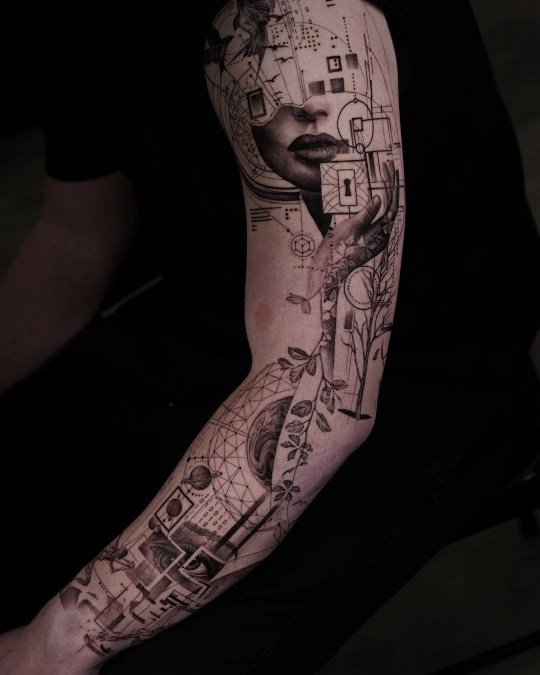
Stark linear grids slice cleanly through soft portrait shading on the upper bicep. An intricate vine of dark, grounded leaves snakes diagonally right across the elbow joint.
Merging organic human features with rigid architectural frameworks builds immediate visual tension.
Balancing heavy shading contrast requires treating your arm like an open floor plan. This specific layout works exceptionally well when you align the diagonal organic elements with your natural muscle contours.
3. Classical Bust and Solar System Blueprint
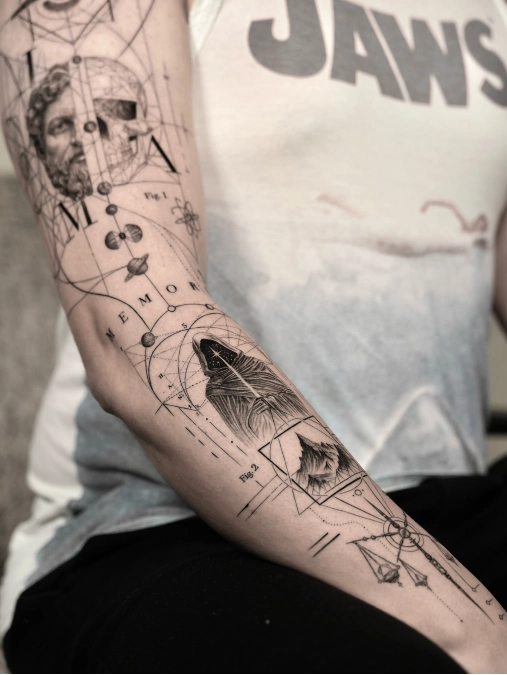
Crisp drafting lines connect a highly detailed split-face bust directly to an orbiting planetary axis. A cloaked figure anchors the forearm with rich, dark shading against wide-open bare skin.
Treating the body like a technical schematic turns scattered concepts into one cohesive visual narrative.
Running a strict linear axis straight down the center naturally enhances muscle contour alignment by drawing the eye vertically. Relying on heavy shading contrast strictly within the core motifs allows the surrounding negative space to act as vital breathing room.
Why This Works
Element 1: The central vertical line acts as a load-bearing wall, keeping floating geometric planets firmly tethered together.
Element 2: Heavily shaded focal points placed on the upper bicep and mid-forearm distribute visual weight evenly across the limb.
Element 3: Leaving wide margins of untouched skin around thin drafting lines prevents the intricate details from blurring over time.
4. Astronaut and Solar Geometry Pathway
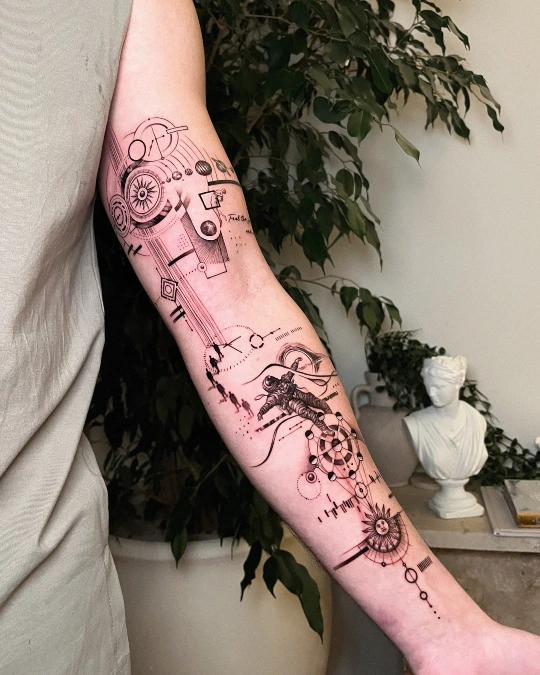
Sharp black parallel lines guide the eye from a detailed sunburst down to a floating astronaut. Small silhouetted figures march across the mid-forearm against a wide expanse of open bare skin.
Using strict linear pathways creates a grounded sense of direction across an airy, minimalist design.
Treating the inner arm like a long hallway requires strong directional guides to maintain visual flow. Placing the densest shading contrast right near the upper bicep and lower wrist anchors the lighter, sketch-like elements floating in between.
Quick Styling Tips
- Budget version: Focus strictly on the fine-line geometric outlines first and build up the heavier realistic shading in a later session.
- Renter tip: Test out major directional lines using high-quality temporary ink to see exactly how the placement wraps as your arm moves.
- Pro move: Ask your artist to drop subtle white ink highlights directly into the deepest black shadows to push the visual contrast even further.
5. Dense Blackwork Mandala and Hexagon Sleeve
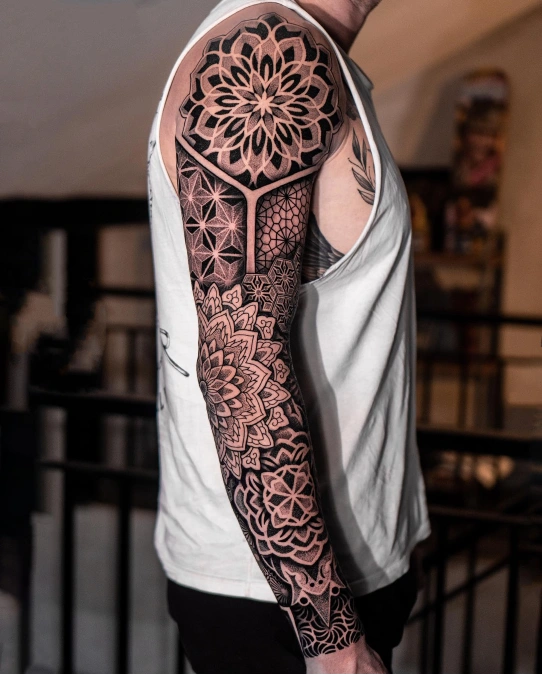
Massive stippled mandalas cap the shoulder and wrap the elbow in deep, plush textures. Geometric cube grids fill the outer bicep alongside tightly packed honeycomb shapes.
Anchoring intense repeating patterns requires thick, grounded borders to contain the visual noise.
Dense blackout sleeves rely on placing the heaviest shading contrast directly over major joints. This specific mapping naturally flatters your underlying muscle contour alignment as you move.
6. Thick Sweeping Blackwork and Hexagon Forearm Sleeve
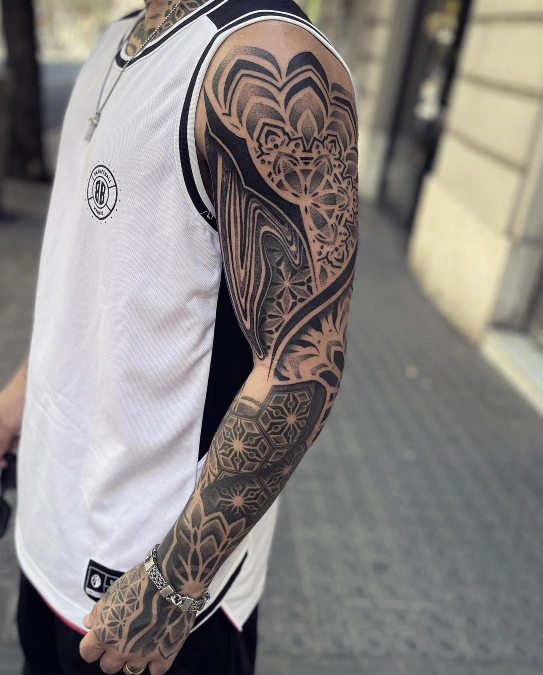
Thick, river-like bands of solid black ink carve bold borders down the upper bicep. Inside these rigid structural walls, soft stippled mandalas rest quietly against the bare skin.
Using thick sweeping blackout lines to frame delicate dot-work creates instant architectural balance.
Treating the arm like an open loft space requires strong visual beams to define different zones. These heavy sweeping borders naturally emphasize your muscle contour alignment while protecting the intricate inner patterns from looking messy.
Quick Styling Tips
- Budget version: Focus on knocking out the thick structural lines first before investing in the highly detailed, time-consuming stippled shading.
- Renter tip: Map out the thickest black bands using a dark marker in the mirror to check exactly how the negative space falls across your joints.
- Pro move: Ask your artist to taper the heavy black borders into sharp points near the wrist to naturally elongate the forearm.
7. Classical Mythology and Sharp Framed Lines
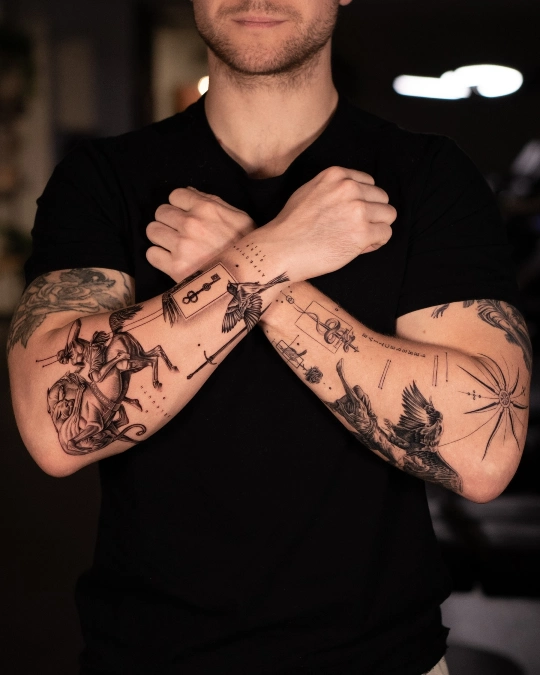
Softly shaded mythological figures clash against crisp, razor-thin drafting lines across both forearms. A heavy dark horse anchors the left limb while a delicate snake winds through a strict rectangular border on the right.
Framing soft classical art inside harsh geometric grids acts like hanging a rich oil painting in a stark modern loft.
Leaving maximum negative space between heavily shaded elements prevents dual pieces from looking visually overwhelming. This specific styling technique heavily respects natural muscle contour alignment by letting the artwork breathe as you move.
8. Stippled Mandala and Scalloped Half Sleeve
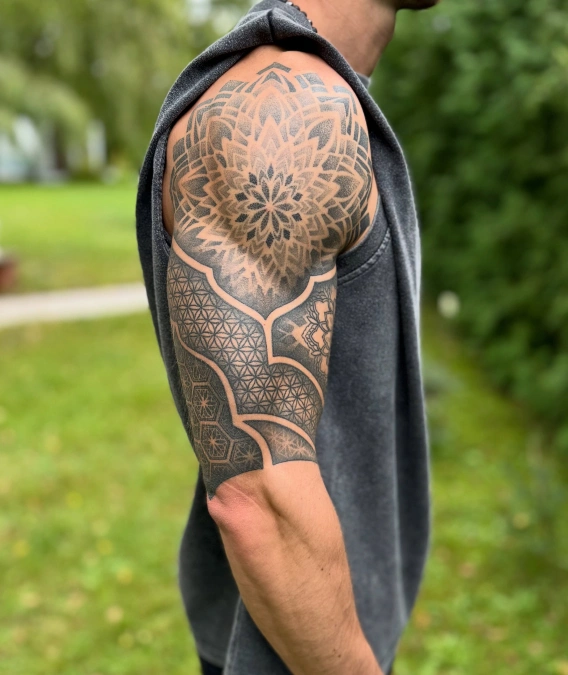
A massive stippled mandala caps the upper shoulder with plush, soft shading. Sweeping black borders carve distinct scalloped zones down the bicep. Tightly packed geometric grids rest firmly inside these lower frames.
Carving thick borders between dense motifs acts like framing dark wallpaper with crisp white wainscoting.
Capping the design right above the elbow establishes a highly structured half-sleeve layout. Wide margins maximize the essential shading contrast across the entire arm.
Why This Works
Element 1: The soft central core draws the eye upward to anchor the ink firmly on the widest part of the shoulder.
Element 2: Heavy framing lines prevent the tightly woven hexagonal grids from visually blending into the dotted top shading.
Element 3: Keeping the lower forearm completely bare grounds the intricate upper arm details and distributes visual weight properly.
9. Minimalist Gallery Wall and Fine Line Memories
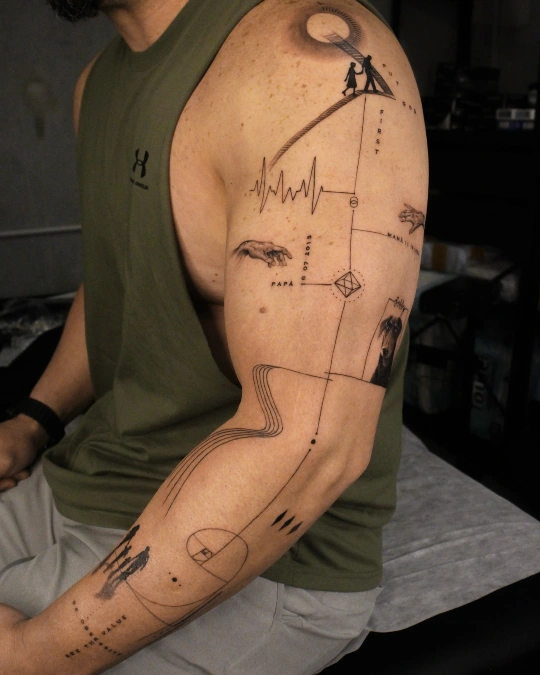
Crisp, razor-thin drafting lines connect scattered realistic portraits and meaningful dates across an expansive bare arm. Softly shaded silhouettes climb toward a glowing circular doorway near the top shoulder, while a structured golden ratio spiral anchors the lower forearm.
Treating your skin like a minimalist gallery wall turns scattered micro-tattoos into one cohesive exhibition.
Leaving massive amounts of untouched skin between these distinct moments works exactly like hanging small art pieces on a vast, bright white living room wall. This airy layout suits guys who appreciate the breathable, less-is-more approach of modern Scandinavian design.
Quick Styling Tips
- Budget version: Focus entirely on mapping out the primary structural drafting lines first, saving the highly shaded micro-portraits for a later session.
- Renter tip: Test the placement of the longest connecting lines with a fine-point marker to ensure they flow naturally as your elbow bends.
- Pro move: Ask your artist to use slightly thicker ink weights for the main axis lines to naturally push the delicate memory portraits further into the visual background.
10. Dense Blackwork Armor and Sweeping Skin Break
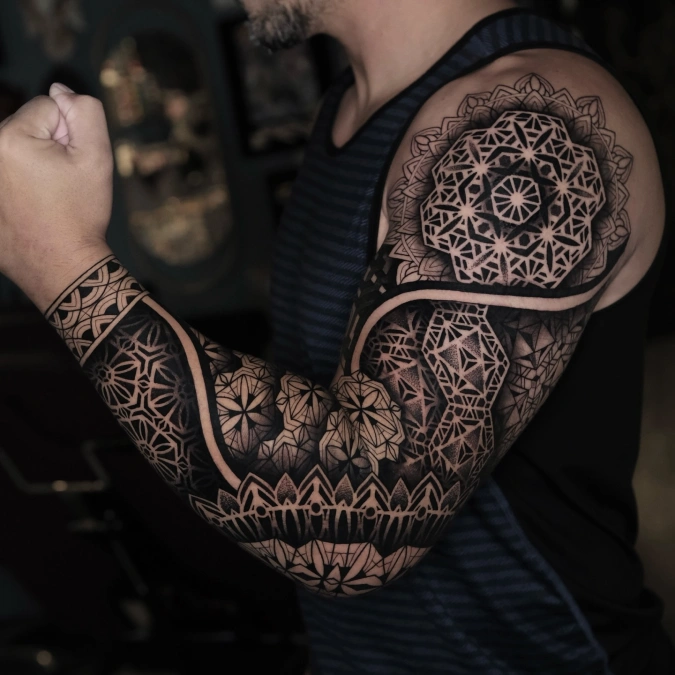
Deep, saturated geometric mandalas wrap the upper shoulder in heavy, textured layers. A thick, unbroken ribbon of completely bare skin slices horizontally across the lower bicep. Tightly woven cubic patterns anchor the inner forearm with rich, dark ink.
Running a wide, bright visual break through intense maximalist patterns keeps the heavy design from feeling completely overwhelming.
Dense blackout sleeves operate exactly like styling a living room with a dark, moody color palette. You absolutely need crisp architectural trim to give the eye a distinct place to rest. Carving a thick channel of negative space heavily respects your natural muscle contour alignment.
Quick Styling Tips
- Budget version: Block in the thick horizontal structural borders first before committing to the hours of intricate honeycomb stippling.
- Renter tip: Wrap a strip of bright athletic tape around your bicep in the mirror to find the most flattering angle for the bare skin break.
- Pro move: Ask your artist to pack their absolute darkest black ink directly against the untouched skin to maximize the sharp architectural contrast.
11. 3D Hexagon and Honeycomb Optical Illusion
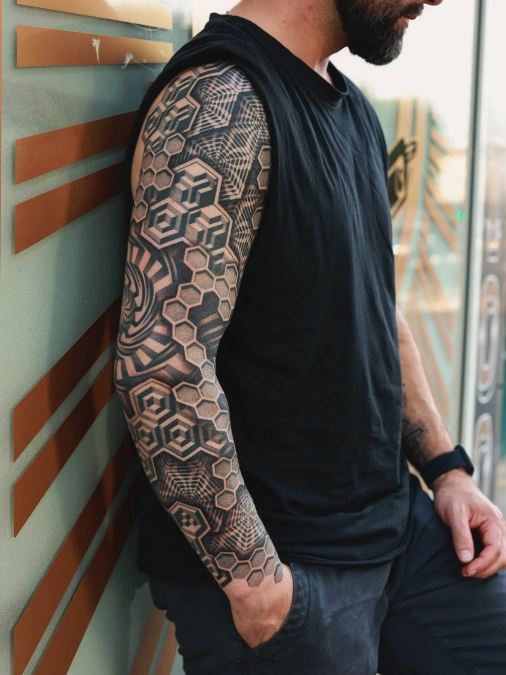
Deeply shaded 3D cubes interlock tightly across the entire arm. Stippled honeycomb grids create an intense visual depth that shifts as light hits the skin. Heavy black gradients give these flat geometric shapes a profoundly sculptural and grounded feel.
Repeating strict geometric tiles establishes an immediate structural rhythm across any large canvas.
Dense 3D patterns wrapped over a full sleeve function exactly like high-contrast floor tiles in a long hallway. Consistent repeating shapes naturally draw the eye vertically to elongate the arm.
12. High Contrast Mandalas and Sweeping Skin Breaks
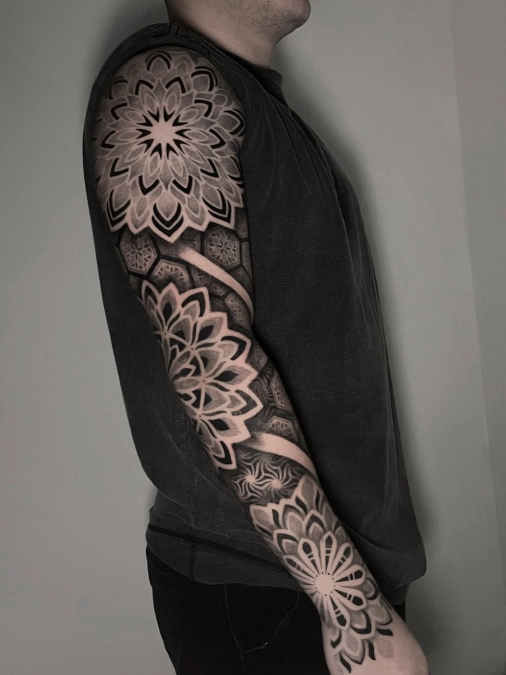
A thick ribbon of completely bare skin spirals dramatically through the dense geometric background. Heavy hexagonal patterns fill the negative space with soft, stippled textures.
Carving wide negative space through heavy blackwork acts like architectural tailoring for your skin.
Breaking up intense, dark moody palettes with bright skin channels provides essential fit optimization for larger arms. This specific spiraling layout naturally contours to your bicep, wrapping the limb in a highly structured, flattering silhouette.
Why This Works
Element 1: The thick bare spiral naturally elongates the arm while preventing the massive mandalas from bleeding together visually.
Element 2: Deep black shading grounds the major joints to establish a solid foundation for the lighter stippled grids.
Element 3: Centering the largest floral motif squarely on the shoulder creates a commanding, high-impact focal point.
13. Geometric Landscape Armband and Crisp Drafting Lines
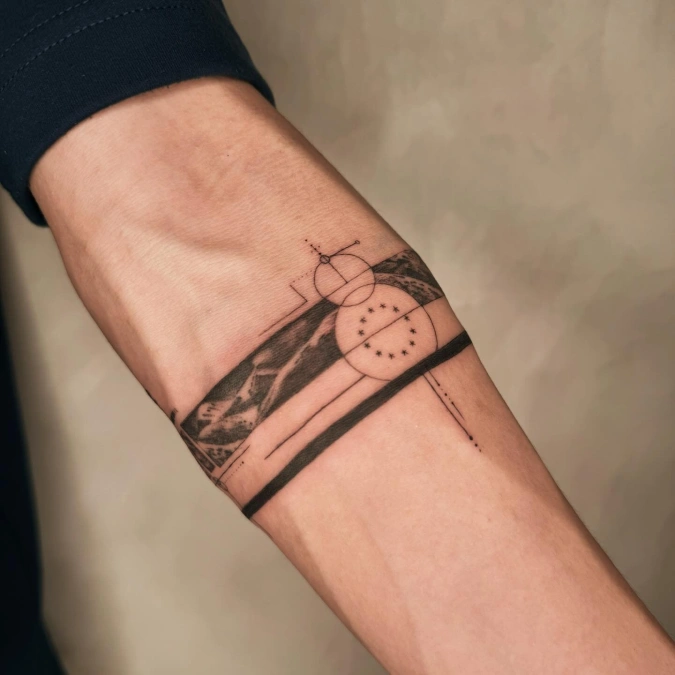
Thin parallel lines wrap the forearm tightly to establish a strict architectural border. Inside this rectangular frame, softly shaded mountain peaks provide a plush, grounded contrast against the bare skin.
Framing a soft organic scene with harsh structural lines acts exactly like cutting a fresh window into a solid gallery wall.
Capping the design as an armband naturally sections off the limb like crisp wainscoting in a minimalist living room. This horizontal layout works exceptionally well for establishing a quiet luxury vibe without committing to a massive, full vertical sleeve.
Quick Styling Tips
- Budget version: Map out the heavy outer bands first before paying for the highly detailed interior mountain shading.
- Renter tip: Wrap a strip of masking tape around your forearm in the mirror to test exactly where this horizontal block naturally falls as you flex.
- Pro move: Ask your artist to drop light stippling into the overlapping geometric circles to naturally bridge the harsh drafting lines with the soft realistic landscape.
14. Saturated Blackwork and Moody Geometric Flow
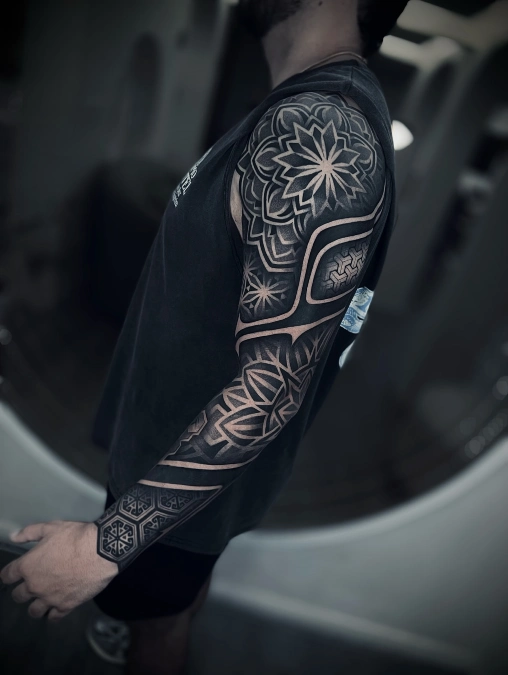
Heavy, saturated black ink completely floods the upper shoulder with a massive stippled mandala. Thick, curving bands of negative space slice through deeply shaded forearm patterns to create rigid structural zones.
Carving sharp skin breaks through intense blackout ink establishes instant architectural balance.
Rocking an ultra-dark tattoo requires the exact same design logic as styling a living room with a rich, moody color palette. You absolutely need stark, bright contrasting trim to keep the heavy visual weight from feeling cramped.
Why This Works
Element 1: Thick framing bands securely contain the sprawling mandalas to prevent the intricate dot-work from visually blurring together over time.
Element 2: Packing the absolute darkest ink directly onto the shoulder builds a powerful, grounded anchor for the sweeping lower patterns.
Element 3: The tight, linear geometric cuff at the bottom sharply contrasts the softer, rounded curves rolling down the bicep.
15. Sharp Chevron Skin Breaks and Plush Mandalas
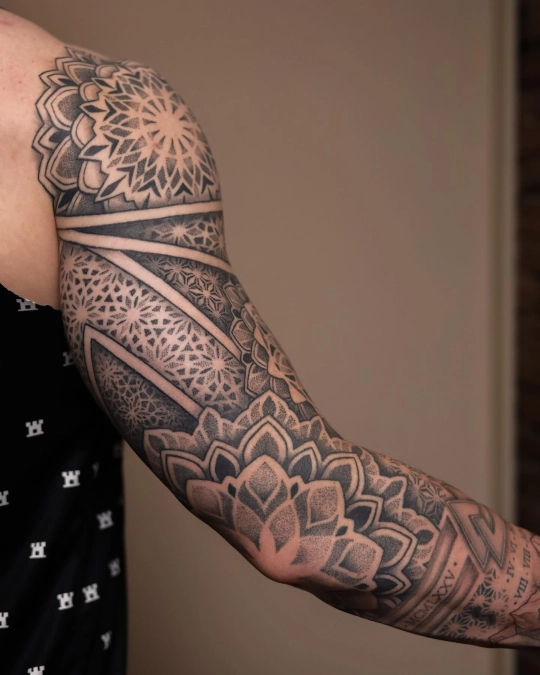
Crisp geometric zigzags slice sharply through the deep black ink on the bicep. Massive stippled mandalas anchor both the shoulder and the lower forearm with plush, soft shading. Leaving thick bands of bare skin untouched naturally brightens the dense grey dot-work.
Slicing harsh diagonal pathways through rounded motifs instantly builds high-contrast architectural tension.
Managing a dark, moody ink palette requires thick visual breaks to keep the design feeling breathable. Deep diagonal skin channels offer excellent fit optimization for broader, plus-size arms by drawing the eye downward rather than cutting bluntly across the limb.
16. Dense Geometric Illusion and Tailored Grid Pattern
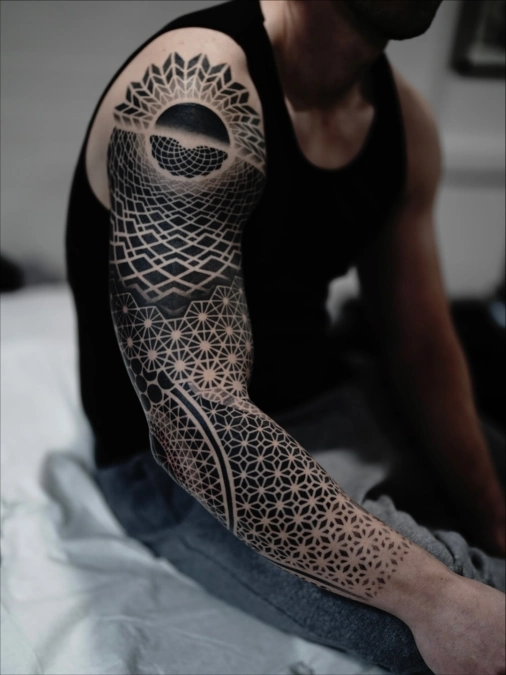
Crisp interlocking stars weave tightly down the entire forearm. A deep black optical illusion anchors the top shoulder with soft, plush shading. Rich gradients give the repeating grid a profoundly grounded, three-dimensional feel.
Applying structured, repeating patterns across a broad surface delivers immediate architectural balance.
Scaling up these intense geometric grids acts like strategic tailoring for larger arms. This continuous layout builds a highly structured silhouette that flatters a plus-size male frame exceptionally well.
Why This Works
Element 1: The heavy dark sphere placed squarely on the joint draws the eye upward to balance a wider build.
Element 2: Shifting from massive structural lines into tight micro-grids provides essential fit optimization along the outer bicep.
Element 3: Leaving tiny pockets of untouched skin inside the stars keeps the dense ink feeling bright and breathable.
17. Dense Mandala Tiles and Plush Floral Sleeve
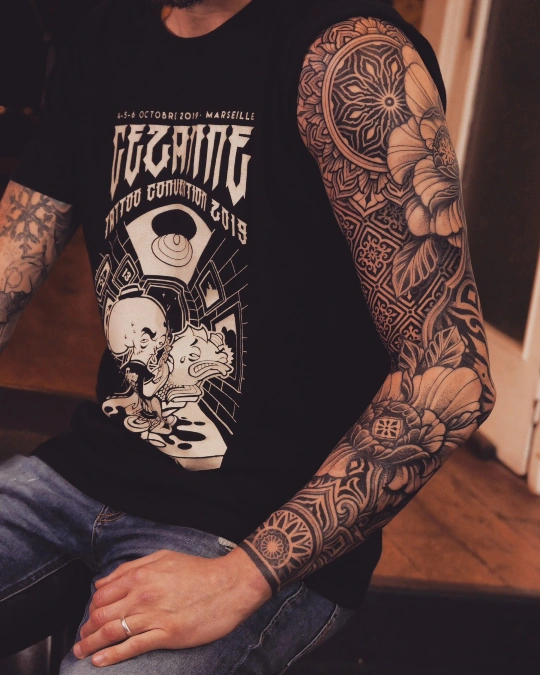
Intricate geometric floor tiles completely fill the negative space with a rich, dark texture. A crisp, stippled mandala cuff anchors the wrist firmly against the bare hand. Deep charcoal shading gives the entire arm a warm, plush finish.
Pairing rigid geometric grids with oversized organic shapes instantly creates a rich, layered visual footprint.
Layering these contrasting patterns works exactly like throwing a chunky woven rug over a sharp hardwood floor. Strategically placing the largest flowers directly over major joints provides exceptional fit optimization for a broader male frame.
Quick Styling Tips
- Budget version: Focus on the major floral outlines and wrist cuff first before paying to fill in the dense background tiles.
- Renter tip: Map out the massive elbow flower using temporary transfer ink to see exactly how the petals shift when you bend your arm.
- Pro move: Ask your artist to leave stark white negative space along the petal edges to push the dark moody background deeper into the skin.
18. Rooted Tree and Fine Line Architecture
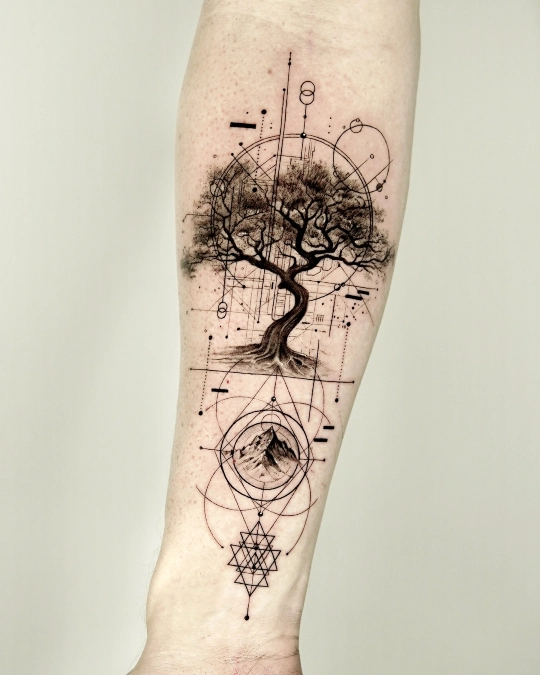
Crisp drafting lines map a precise grid directly behind a deeply shaded, twisting tree on the upper forearm. Delicate geometric circles overlap softly against the stark bare skin.
Anchoring organic nature motifs within strict architectural blueprints creates immediate grounded balance.
Treating your forearm like a carefully planned landscape design requires strong structural boundaries. This airy layout works incredibly well for guys who love grounded earth tones mixed with clean modern precision.
19. Centered Elbow Mandala and Moody Geometric Armor
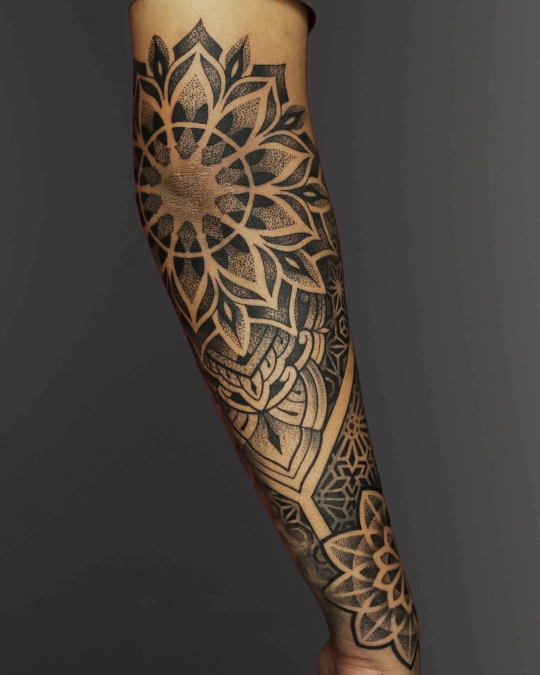
Crisp geometric grids flow down the forearm with heavy, dark shading. Thick bare borders slice cleanly through the charcoal patterns to create sharp structural zones.
Centering massive geometric anchors directly on major joints establishes immediate architectural balance.
Managing heavily saturated ink requires strict structural framing to keep the design breathable. Leaving thick channels of untouched skin actively breaks up the intense visual weight.
Quick Styling Tips
- Budget version: Block out the thick negative space borders first before paying for the highly detailed interior dot-work shading.
- Renter tip: Test the massive central mandala using high-quality temporary ink to see exactly how the petals shift when you bend your arm.
- Pro move: Ask your artist to pack solid black ink right against the bare skin channels to maximize the dark, moody visual contrast.