You are utterly exhausted. Yet the moment your head hits the pillow, your heart races. Your mind starts running a marathon.
Chronic stress keeps your autonomic nervous system locked in sympathetic activation.
This fight or flight overdrive makes true relaxation biologically impossible. Current 2026 data from institutions like Brigham and Women’s Hospital highlight a massive problem.
Overlapping autonomic issues keep the brain trapped in high gear. This prevents vital cellular repair.
You need evening nervous system downregulation. This guide offers 12 evidence based stress relief steps. These “regulation reps” manually signal safety to your brainstem. You will shift into a restorative parasympathetic state.
Step 1: Perform a Cognitive Brain Dump to Clear Your Mind

Your brain treats unfinished tasks as active threats. Writing them down physically removes the threat. This biological trick will offload mental clutter.
Unfinished tasks trigger the Zeigarnik effect. This is our natural human tendency to remember uncompleted tasks better than finished ones.
A proper evening routine requires you to separate the workday from personal time. You must give your brain permission to stop working.
Evening Brain Dump
Total Extraction
Write down your complete to-do list for tomorrow to prevent lingering thoughts.
Holistic Capture
Make sure to include both work tasks and personal errands.
Physical Finality
Close the notebook to physically and mentally finalize the brain dump process.
Boundary Setting
Leave the list entirely outside your bedroom to preserve your sleep sanctuary.
Step 2: Orient to Physical Safety for Anxiety Relief
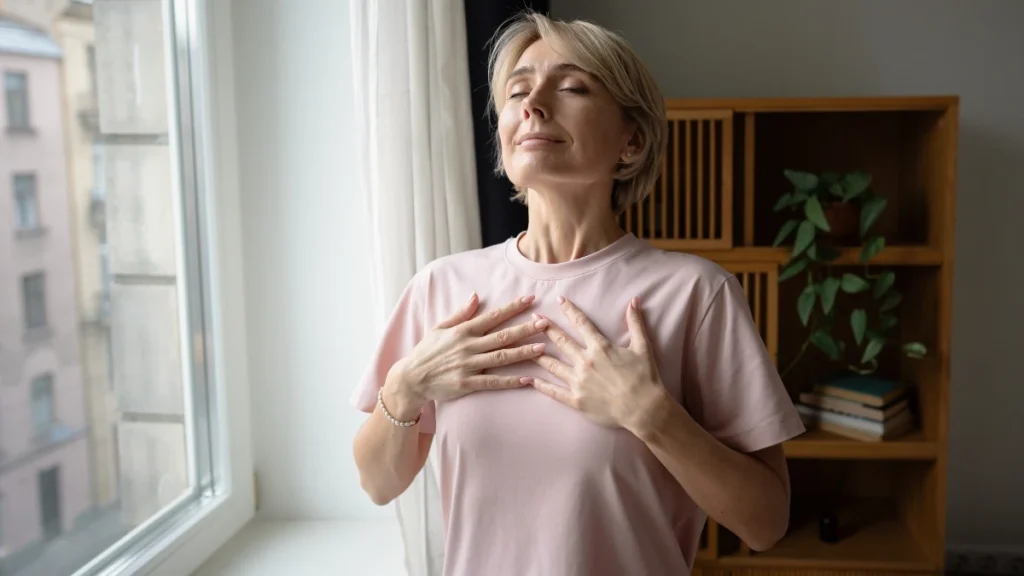
Now that your thoughts are on paper, you must ground your body. Your brain needs undeniable proof that you are safe right now. You can use your physical senses to provide this proof.
Trauma experts use an “Orient to Safety” micro habit. They deliberately slow down and visually scan the room. These somatic techniques for anxiety remind your brain that no predators are nearby.
- Look around the room and name three things you see.
- Listen closely and name three things you hear.
- Touch something near you and notice how it feels against your skin.
Step 3: Discharge Energy with Somatic Shaking

Animals naturally shake off stress hormones after a physical threat passes. Humans usually suppress this natural urge to shake. This suppression traps muscular tension inside your body.
Shaking creates somatic movement. This movement helps discharge stress rapidly. It signals safety to your nervous system.
- Stand up and shake your arms vigorously.
- Shake your left leg and then your right leg.
- Wiggle your jaw to release stored nervous energy.
- Do this continuous shaking for a full 60 seconds.
Step 4: Drop the Temperature for Sleep Onset

A cool body tells your brain it is time to sleep. Your core body temperature must drop to start the deep sleep phase. A hot room completely prevents neurological restoration.
You need a cool sleep sanctuary environment to regulate emotions and rest deeply. Sleep architecture data from 2026 is very clear on this biological rule. The optimal bedroom temperature range is exactly 65 to 68 degrees Fahrenheit.
- Turn down your thermostat an hour before bed.
- Open a window if the air outside is cool.
- Use breathable cotton or linen sheets on your bed.
Step 5: Master Exhale Dominant Breathing
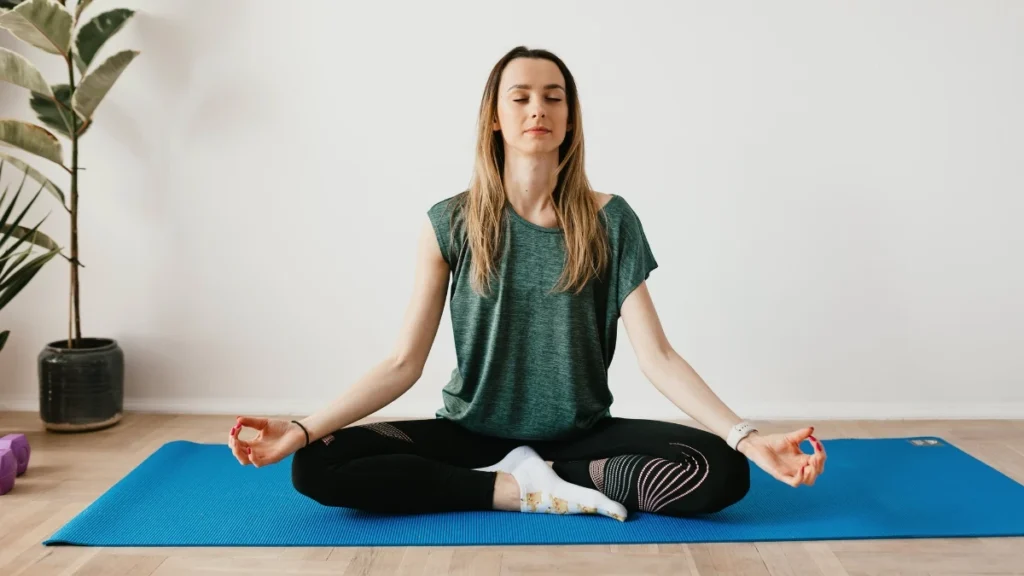
Fast breathing signals danger to your brain. Longer exhales do the exact opposite. They stimulate baroreceptors in your chest.
These receptors lower your blood pressure immediately. Dr. Andrew Weil created the 4 7 8 method for this exact reason. This method acts like a natural tranquilizer for your nervous system.
Exhaling twice as long as inhaling increases vagal tone. This forces parasympathetic activation. Add this to your vagus nerve stimulation evening routine.
The 4-7-8 Anchor
Nervous System Reset
Quiet Inhale
Breathe through your nose for 4 seconds.
Gentle Suspension
Hold your breath entirely for 7 seconds.
Audible Release
Exhale through the mouth for exactly 8 seconds.
Rhythm Control
Repeat the exact cycle four total times.
Step 6: Gargle Water to Stimulate the Vagus Nerve

Your vagus nerve acts like a brake pedal for your body’s stress response.
Vagus nerve vector illustration. Labeled anatomical structure and location.
It connects directly to your vocal cords and the back of your throat.
Aggressive gargling manually activates this massive nerve. This action instantly improves vagal tone. It is a perfect step for evening nervous system downregulation. You can turn this into an easy habit by stacking it with your daily dental care.
- Fill a small glass with plain water.
- Take a large sip after you finish brushing your teeth.
- Gargle aggressively in the back of your throat for 30 seconds.
Step 7: Apply Brief Cold Exposure

Cold water on your face triggers a strong mammalian reflex. This biological response abruptly slows your heart rate. It forces blood back to your core organs.
This creates immediate autonomic balance. It is a highly effective form of evidence based stress relief. The cold shock tells your nervous system to power down and conserve energy.
- Turn your shower water cold for the final 30 seconds.
- Or simply splash icy water on your face in the bathroom sink.
- Pat your skin dry with a soft towel.
Step 8: Release Spinal Tension with Gentle Waves

Your central nervous system runs straight through your spinal cord. Rigid posture traps stress deeply in your back and hips.
Slow movement restores physical fluidity to these tense areas. This helps release stored emotions in your pelvic region. These gentle movement practices work as powerful somatic techniques for anxiety.
- Get down on a yoga mat or a soft carpet.
- Perform slow circles with your hips.
- Move your spine in gentle wave motions.
- Breathe deeply while moving for two full minutes.
Step 9: Practice the Legs Up the Wall Pose
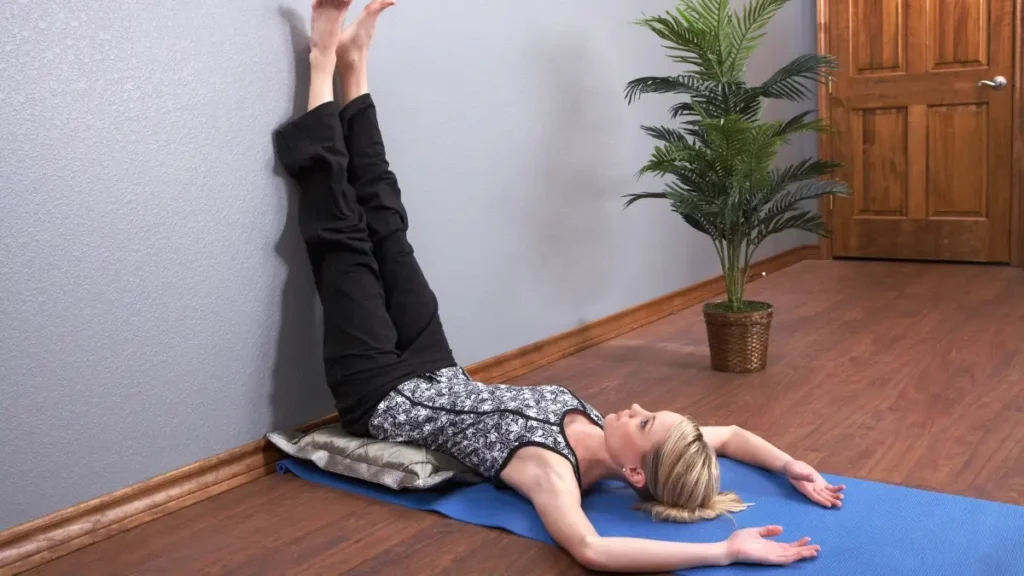
Inverting your body changes how your blood flows. Gravity pulls blood from your legs to your heart.
This physical shift naturally slows down your heart rate. It triggers a deep rest relaxation response. This simple pose is crucial for evening nervous system downregulation. It requires zero effort once you get into position.
The Vertical Reset
Ground Your Spine
Lie flat on your back near a clear wall to neutralize spinal pressure.
Vertical Alignment
Extend your legs vertically against the wall to encourage blood flow return.
Open Heart
Rest your arms flat on the floor beside you to open the chest and shoulders.
Passive Stillness
Stay entirely still for 5 to 10 minutes to trigger the relaxation response.
Step 10: Complete a 2 Minute Interoceptive Body Scan

Interoception means feeling what happens inside your physical body. You want to bring your full awareness to internal physical sensations.
The goal is to name the emotion without trying to fix it. Recent Internal Family Systems therapy research proves this works.
Body scanning shows strong effect sizes in reducing cortisol levels. This simple check in changes your nervous system states quickly.
- Close your eyes and focus on your toes.
- Slowly move your attention up to your head.
- Notice any tight spots or heavy areas.
- Breathe into those specific spots for two minutes.
Step 11: Implement a Strict Digital Sunset

Blue light from screens mimics bright daylight. This digital content causes massive psychological arousal.
Studies show that minimal blue light exposure before bed is deeply harmful. It can suppress natural melatonin production by up to 50 percent.
You must manage screen time to protect your rest. Good sleep hygiene practices require physical boundaries with technology.
- Stop looking at all screens one full hour before bed.
- Plug your phone into a charger in another room.
- Read a physical paper book instead of scrolling on a device.
Step 12: Seal Your Sleep Sanctuary in Darkness
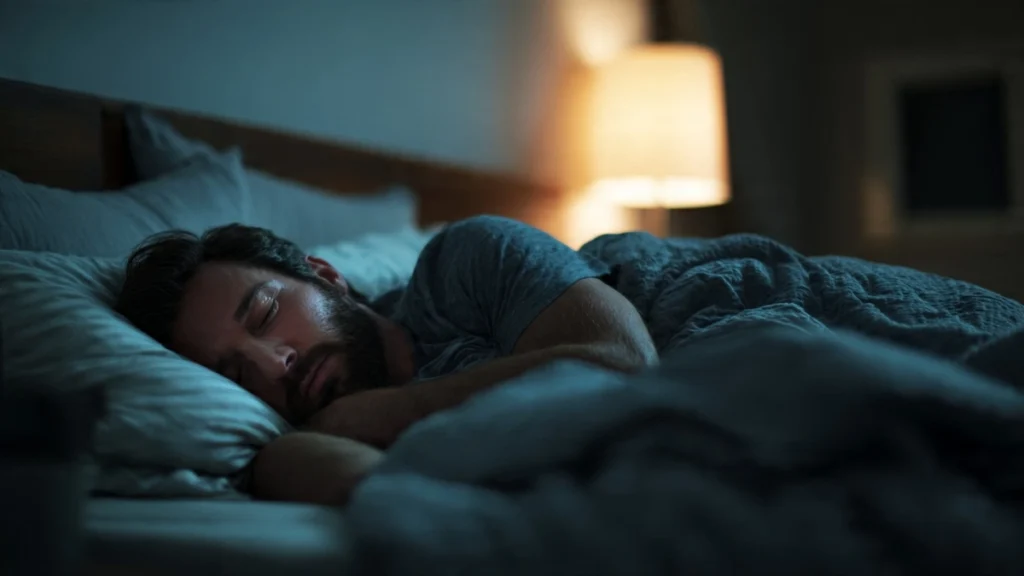
Your pineal gland creates melatonin to help you sleep. But this small gland requires absolute darkness to function properly.
Even tiny light leaks disrupt your deep sleep phases. Total darkness sends vital safety signals to your brain. This enables true neurological restoration. You need a completely dark room for deep restorative sleep.
Midnight Sanctuary
Structural Shielding
Install thick blackout curtains to neutralize external light pollution.
Stealth Electronics
Cover glowing lights on TVs or routers to eliminate indoor “blue light” leaks.
Personal Horizon
Wear a high-quality eye mask if you cannot achieve a total room blackout.
Conclusion
Regulation is not a personality trait. It is a biological skill built through small and consistent micro moments. You have the power to change how your body feels.
Pick just one single step to try tonight. You might start with the 4 7 8 breathing method. Or you might simply try gargling water after you brush your teeth. Observe exactly how your body reacts to these physical changes.
With daily practice you will master your evening nervous system downregulation and finally get the rest you deserve.