

While everyone debates mental health openly, 75% of suicides are men—yet we barely notice the silence.
We talk about depression, anxiety, and therapy like never before. Mental health awareness is everywhere. But somehow, we’re missing half the population. Men are dying at alarming rates, and most people don’t even realize there’s a crisis.
The men’s mental health crisis isn’t just numbers on a page. It’s your neighbor who drinks alone every night. Your coworker who snaps at everyone lately. Your brother who stopped calling. These men are struggling, but they don’t have the words to say it. Society never taught them how.
Male suicide rates tell a devastating story. Men face unprecedented challenges but lack support systems that actually work for them. They can’t find the language to express pain. They don’t have social permission to ask for help.
This creates a perfect storm of suffering in silence.
In this article, you’ll discover the shocking truth about men’s emotional wellbeing. You’ll learn why traditional masculinity becomes a trap that prevents healing. We’ll show you how to spot warning signs in men you care about – because they won’t tell you directly.
Most importantly, you’ll get concrete steps to support struggling men before it’s too late. Because knowing the problem exists isn’t enough. It’s time to act.
The Hidden Crisis: Why Men Are Dying in Silence

Picture this: A 45-year-old dad sits in his car after work every day for 20 minutes. Not because he’s avoiding traffic. He’s trying to pull himself together before walking through his front door. His family has no idea he’s been fighting depression for two years.
This story isn’t rare. It’s everywhere.
The numbers paint a scary picture. Men account for 75% of suicides in the US, according to CDC data. That’s not a typo. Three out of four people who take their own lives are men. Male suicide rates run 3-4 times higher than women’s across the globe.
But here’s what makes it worse. Men won’t ask for help.
Only 1 in 3 therapy patients are male, based on APA statistics. Think about that. Women are twice as likely to get professional help when they’re struggling. Men suffer in silence instead.
The problems stack up fast. Men are 2 times more likely to develop alcohol dependency. They use substances to numb the pain instead of talking about it. A recent YouGov survey found that 40% of men report having no close friends. Zero. That’s almost half of all men walking around with no one to talk to.
Take Jake, a 38-year-old engineer. He lost his job six months ago. His wife doesn’t know he’s been lying about going to work every day. He sits in coffee shops, sends out resumes, and comes home acting like everything’s normal. The pressure is crushing him, but he thinks asking for help makes him weak.
Work and money stress hit men harder. Society still expects men to be providers. When they can’t pay bills or advance in their careers, shame takes over. Men’s emotional wellbeing gets crushed under financial pressure and workplace demands.
The loneliness epidemic affects men differently too. While women build support networks, men often rely on one person – usually their romantic partner. When that relationship ends, they lose their only emotional outlet.
Men’s mental health stays invisible because we teach boys to “man up.” They learn early that showing feelings is wrong. By the time they’re adults, they don’t know how to express emotions or ask for support.
The cost is deadly. Every day, roughly 125 Americans die by suicide. Most are men who felt they had nowhere to turn.
This crisis won’t fix itself. Understanding these statistics is the first step. The next step is creating spaces where men feel safe to be human – to hurt, to struggle, and to ask for help without shame.
The “Strong Silent Type” Trap: How Toxic Masculinity Damages Mental Health

Your dad never cried in front of you. Your boss rewards the guy who works 80-hour weeks without complaining. Your friends think therapy is for “weak people.” Sound familiar?
This is toxic masculinity mental health damage in action. And it’s killing men slowly.
Society taught you that real men don’t show feelings. From childhood, boys hear “big boys don’t cry” and “walk it off.” By adulthood, you’ve learned that admitting pain makes you less of a man. This creates a trap that’s hard to escape.
Here’s what happens when you bottle up emotions for years. Your body keeps score.
Studies show that men who suppress emotions have higher cortisol levels – that’s your stress hormone. Chronic high cortisol leads to heart disease, high blood pressure, and weakened immune systems. Male emotional suppression literally makes you sick.
Take corporate culture. The executive who shows up sick gets praised. The one who admits he’s struggling with depression gets passed over for promotions. Research shows that while vulnerable leadership actually improves team performance, most companies still reward the “tough it out” mentality.
Sports culture makes this worse. Athletes learn to play through pain and never show weakness. This messaging carries into regular life. Men think emotional pain should be handled the same way as a twisted ankle – just keep going.
Father-son relationships often repeat these patterns. Dad never talked about his feelings, so sons don’t learn how. Three generations of men end up emotionally stunted because nobody broke the cycle.
Dating adds another layer of pressure. You’re expected to be the provider and protector. Show vulnerability too early? You might get labeled as “not masculine enough.” This creates fake relationships where you can’t be your real self.
The shame cycle keeps you trapped. You feel bad, but showing it makes you feel weak, which makes you feel worse. So you push feelings down further. The cycle repeats until something breaks – usually your mental health or your relationships.
Here’s what the research actually shows: Men who express emotions have better relationships. Their partners report higher satisfaction levels. Their kids feel closer to them. But toxic masculinity mental health messaging tells you the opposite.
The workplace data is eye-opening too. Leaders who show appropriate vulnerability build stronger teams and get better results. Yet most men still think showing any weakness will hurt their careers.
Your body rebels against emotional suppression. Headaches, stomach problems, sleep issues – these often trace back to unexpressed feelings. Men’s emotional wellbeing affects everything else.
The trap works because it feels protective. Staying quiet seems safer than risking judgment. But silence doesn’t protect you. It slowly damages your health, relationships, and career.
Breaking free starts with recognizing the trap exists. Those voices telling you to “man up” aren’t helping you. They’re hurting you.
Real strength means being honest about your struggles. It means asking for help when you need it. It means showing your kids that men can have feelings and still be strong.
The “strong silent type” isn’t strong at all. He’s scared, isolated, and slowly dying inside. You deserve better than that trap.
The Hidden Warning Signs: How to Recognize When Men Are Struggling

Your brother seems angrier lately. Your coworker snaps at small things. Your husband suddenly loves extreme sports. These might not be personality changes. They could be cries for help.
Men’s depression symptoms look different from what you expect. While women often feel sad and cry, men get angry and restless. This difference causes people to miss male mental health warning signs completely.
Here’s what struggling men actually look like:
Anger becomes their go-to emotion. Road rage over minor traffic. Yelling at referees on TV. Picking fights about nothing. Depression in men often wears an anger mask because society says anger is more acceptable than sadness for males.
They take bigger risks too. Suddenly buying a motorcycle at 45. Gambling more than usual. Driving too fast. Risky behavior gives them a temporary escape from emotional pain.
Their bodies send distress signals. Men ignore these physical symptoms because they think mental health only affects your mind:
- Constant headaches that medicine won’t fix
- Stomach problems with no medical cause
- Sleeping too much or not at all
- Back pain that comes and goes
- Getting sick more often than normal
Watch for behavioral changes. The social guy who stops seeing friends. The neat person whose house becomes messy. Someone who loved hobbies but quit everything. Men withdraw differently than women – they don’t always isolate completely, but they stop doing things that used to matter.
At work, performance drops in specific ways. Missing deadlines they used to hit easily. Calling in sick more often. Conflict with coworkers who they got along with before. Taking longer lunches or leaving early without explanation.
Social withdrawal happens gradually. First, they skip the group hangouts. Then they stop responding to texts quickly. Eventually, they only show up when they absolutely have to. Men often keep one or two relationships going while cutting off everyone else.
Here are questions that help:
- “You seem stressed lately. What’s going on?”
- “I noticed you haven’t been yourself. Want to talk?”
- “Is everything okay? You seem different.”
Don’t ask “Are you depressed?” Most men will say no automatically.
When should you worry? Normal stress affects sleep for a few days. Depression affects sleep for weeks. Normal stress makes someone grumpy sometimes. Depression makes them angry most of the time.
Cultural background matters too. Some men were taught that any emotion except anger is wrong. Others learned that family problems stay private. Pay attention to changes from their normal behavior, not what you think they should act like.
The key is noticing changes. The quiet guy who becomes loud. The social person who goes silent. The responsible one who stops caring about work. These shifts signal something’s wrong.
Don’t wait for someone to ask for help. Most struggling men won’t. They’re waiting for someone to notice and care enough to ask first.
The Perfect Storm: Modern Pressures Crushing Men’s Mental Health

You scroll through LinkedIn and see former classmates getting promoted while you’re still stuck. You swipe through dating apps getting zero matches. Your dad built things with his hands, but you push pixels on a screen. Welcome to the modern masculinity crisis.
The economy shifted faster than anyone expected. Jobs your father counted on disappeared. Manufacturing, construction, and trade work – traditional male careers – either moved overseas or got automated. You’re competing for office jobs that didn’t exist 30 years ago, often against people with different skill sets.
Remote work made this worse. You lost the workplace relationships that used to sustain men. No more grabbing drinks after work or talking during lunch breaks. Male identity issues multiply when you’re isolated in a home office, wondering if your job even matters.
Social media turned life into a competition you can’t win. Instagram shows other guys with perfect bodies, expensive cars, and beautiful girlfriends. LinkedIn makes it seem like everyone else is crushing their career goals. You compare your behind-the-scenes reality to other people’s highlight reels.
Dating apps destroyed traditional ways men met partners. Instead of building connections through shared activities, you get judged on six photos and a bio. Rejection became instant and anonymous. Your self-worth gets tied to swipe statistics.
Gender roles changed, but nobody gave you the manual. Your grandfather knew his role – work, provide, protect. Simple. Now you’re supposed to be sensitive but strong, successful but humble, confident but not arrogant. Men’s mental health suffers when you don’t know what’s expected anymore.
Women entered the workforce and often out-perform men in education and early career success. This isn’t bad, but it challenges traditional male identity in ways previous generations never faced. You might feel lost about your purpose.
Political messages exploit these insecurities. Different groups tell you that either masculinity is toxic or under attack. Both messages create anxiety. You’re caught between people saying men are the problem and others saying men are victims. This political noise makes male identity issues worse.
Technology replaced activities that used to bond men together. Instead of playing sports, fixing cars, or building things, you play video games alone. Online communities can help, but they often become echo chambers that increase isolation instead of real connection.
The pressure builds from all sides. Economic stress about providing for family. Social pressure to look successful online. Confusion about what it means to be a good man. Political arguments that make you feel attacked or guilty just for being male.
Previous generations had clearer expectations and stronger communities. You’re figuring out modern masculinity without a roadmap while dealing with economic uncertainty your parents never faced.
This perfect storm creates mental health problems that feel impossible to solve. But recognizing these pressures is the first step to handling them better.
Breaking the Cycle: Practical Solutions for Supporting Men’s Mental Health

Your friend is struggling, but every time you ask “How are you?” he says “Fine.” Your brother drinks more than usual but won’t talk about it. Your coworker seems angry all the time. How do you actually help?
The good news: men’s mental health support works when you do it right. Here’s how.
Start conversations the right way. Don’t ask vague questions. Men shut down when they feel pressured to share feelings. Instead, try these approaches:
“I noticed you seem stressed about work lately. What’s the biggest challenge right now?”
“You haven’t seemed like yourself recently. Is something going on?”
“I’ve been there too. Want to grab coffee and talk about it?”
The key is being specific about what you observed and offering practical support. Men respond better to problem-solving conversations than emotional check-ins.
Find male-friendly therapy resources. Traditional therapy doesn’t work for many men because it feels too touchy-feely. Look for therapists who use these approaches:
- Cognitive Behavioral Therapy (CBT) focuses on practical problem-solving
- Solution-focused therapy sets specific goals
- Group therapy with other men reduces isolation
- Online therapy apps like BetterHelp or Talkspace feel less intimidating
Organizations like Men’s Health Network and the American Foundation for Suicide Prevention have directories of male therapy resources.
Build support networks that actually work for men. Most men won’t join a “feelings circle.” But they will:
- Join hobby groups (woodworking, motorcycles, hiking)
- Participate in sports leagues or fitness classes
- Volunteer for causes they care about
- Take classes to learn new skills
The activity gives men something to talk about besides their problems. Relationships build naturally around shared interests.
Create workplace initiatives that help. Smart companies are implementing programs that work:
- Mental health days without requiring explanations
- Employee resource groups for men’s issues
- Lunch-and-learn sessions about stress management
- Confidential counseling services through Employee Assistance Programs
- Flexible work arrangements that reduce commute stress
One tech company started “Tool Talk Tuesdays” where men could discuss work stress while learning practical skills like basic car repair. Participation tripled compared to traditional wellness seminars.
Community programs showing real results. Men’s Sheds originated in Australia and now exist worldwide. Men gather in workshop spaces to build things while naturally talking about life challenges. Suicide rates dropped significantly in areas with Men’s Sheds programs.
Veteran organizations use similar approaches. They combine practical activities with peer support, helping men with depression without making it feel like therapy.
Self-care approaches that work for men. Forget bubble baths and meditation apps. Men respond better to:
- Physical exercise that releases stress
- Learning new skills or hobbies
- Fixing or building things with their hands
- Outdoor activities like hiking or fishing
- Competitive activities that provide structure
Success story: Mike’s turnaround. Mike, a 42-year-old engineer, was drinking heavily after his divorce. His brother didn’t lecture him about feelings. Instead, he invited Mike to join a weekend basketball league. Through playing with the same group weekly, Mike started opening up about his struggles. One teammate mentioned seeing a counselor and recommended someone. Two years later, Mike coaches youth basketball and mentors other divorced dads.
What Society Must Change: Systemic Solutions to the Men’s Mental Health Crisis
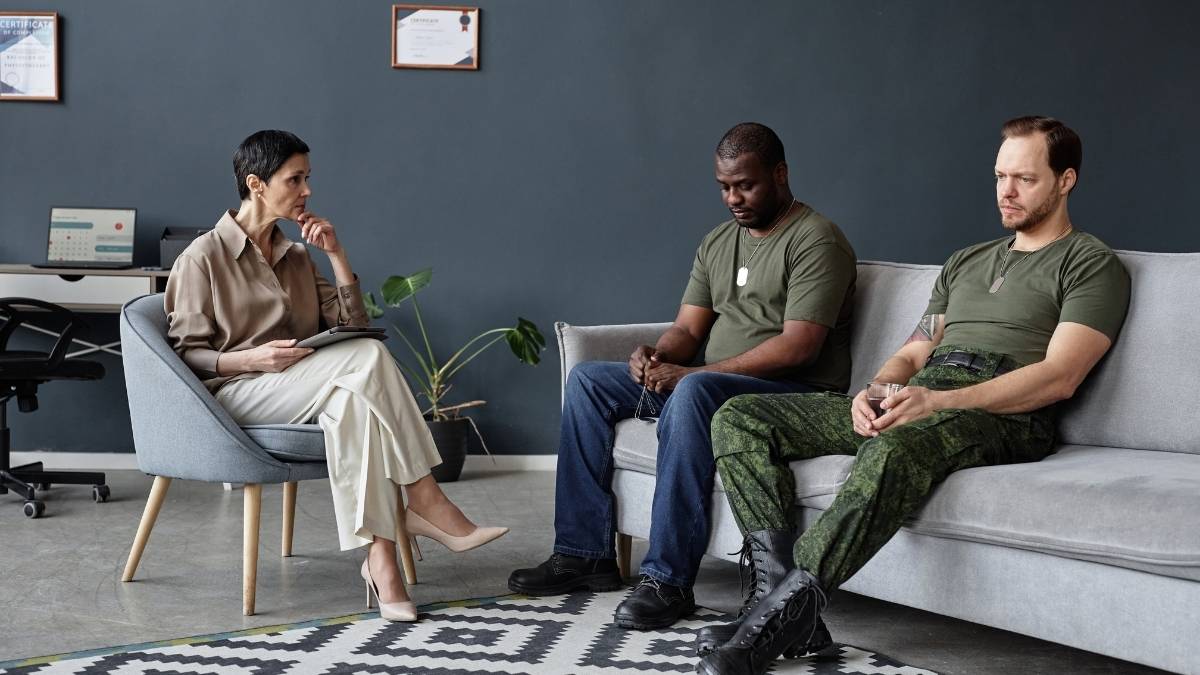
Individual therapy helps one person. But when 75% of suicides are men, we need bigger fixes. Here’s what society must change to save lives.
Healthcare systems need a complete overhaul. Right now, mental health care is designed for how women express depression – sadness, crying, talking about feelings. Men show up angry, drinking too much, or taking risks. Most doctors miss these signs completely.
Insurance companies should cover male-specific mental health programs. Men’s therapy groups cost the same as individual sessions but work better for many guys. Yet most insurance won’t pay for them.
Primary care doctors need training to spot men’s depression symptoms. When a 45-year-old man comes in with back pain and insomnia, that might be depression, not just physical problems.
Schools must teach boys emotional skills early. We teach girls it’s okay to cry and ask for help. We tell boys to “toughen up” and “handle it yourself.” This creates adults who don’t know how to process emotions.
Elementary schools should include emotional literacy in regular curriculum. Not just for special needs kids – for everyone. Boys need to learn that having feelings is normal and healthy.
Physical education programs should include team-building activities that let boys connect emotionally while staying active. Sports can build emotional intelligence when coached right.
Workplace culture transformation starts now. Companies that only reward the “grind it out” mentality are killing their male employees. Literally.
Men’s mental health policy should require large employers to offer mental health days without questions. Managers need training to recognize when men are struggling and how to help without making it weird.
Employee assistance programs should include male-focused support groups and activities. A woodworking class where guys can talk about stress works better than a meditation session for many men.
Media representation matters more than you think. TV shows and movies still show men as either tough guys who never struggle or complete disasters. We need more examples of normal guys dealing with problems in healthy ways.
Public awareness campaigns should feature real men talking about getting help, not celebrities or athletes. The guy next door sharing his story hits harder than a famous person’s testimony.
Policy changes that work: Australia created Men’s Sheds programs with government funding. Suicide rates dropped in those communities. We could do the same here.
Systemic change men’s wellbeing requires investment, not just awareness. Mental health funding should specifically target male-friendly programs, not just add men to existing women-focused approaches.
The current system fails men because it wasn’t built for them. Time to build something that works.
Conclusion
The men’s mental health crisis is real, and it’s happening in your family, workplace, and community right now. Every day, we lose fathers, brothers, sons, and friends who felt they had nowhere to turn.
But here’s what gives hope: change is possible when we act together.
Seeking help isn’t weakness – it’s the strongest thing a man can do. When men get support, everyone benefits. Families heal. Workplaces become healthier. Communities grow stronger.
You can make a difference today. Text that friend who hasn’t seemed like himself lately. Share mental health resources on social media. When you hear someone say “man up,” speak up instead. Support policies that fund male-friendly mental health programs.
Supporting men’s emotional wellbeing starts with small actions that create big changes. Challenge the idea that men should suffer in silence. Show the men in your life that asking for help takes courage, not weakness.
The statistics are scary, but they’re not permanent. Every conversation you start, every stereotype you challenge, every resource you share helps save lives.