
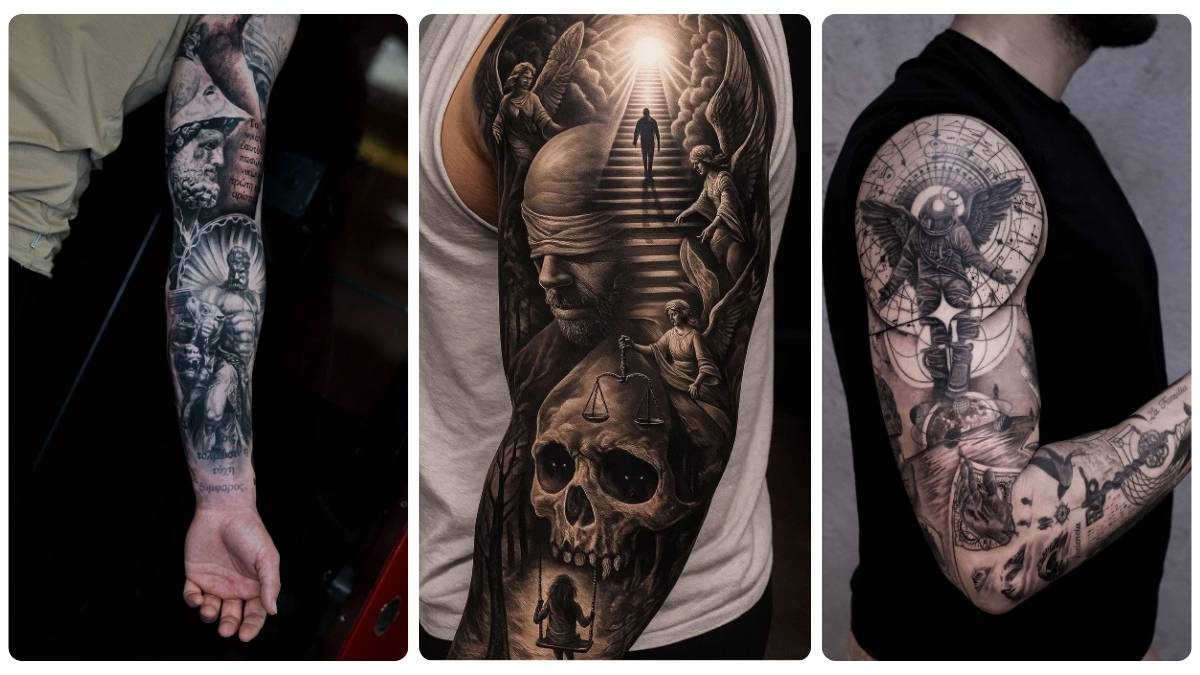
Wearing a black and grey sleeve feels like wrapping your arm in shadow and smoke. Fine linework catches the eye like art on a bare wall. Dark shading creates deep contrast against the skin.
This monochrome approach hits hard right now. Delicate details mixed with heavy black work offer immense versatility for your personal canvas. Anyone wanting a bold, cohesive look without clashing hues finds this method highly practical.
Master Contrast And Placement Building The Foundation
Grounding a large piece requires planning the darkest areas first. Heavy black sections anchor the overall design much like a massive rug grounds a room.
Lighter greys fill the surrounding gaps to provide visual breathing room. This strategy prevents the artwork from looking dense and unreadable from a distance.
INK DYNAMICS
1. Chiaroscuro Stairway And Skull Composition
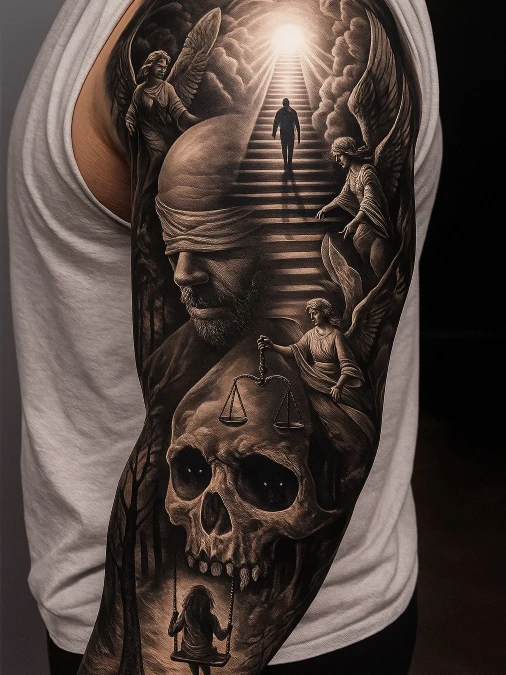
Bright, piercing white ink creates a glowing focal point at the top of the shoulder. Soft shading transitions downward through winged figures into dense, inky black at the base.
Heavy shading at the forearm acts like a dark rug to ground the entire vertical layout.
Placing your deepest shadows near the elbow prevents complex designs from feeling top-heavy. This specific vertical arrangement suits long arms requiring a cohesive, storytelling flow.
2. Geometric Mandala And Dotwork Tapestry
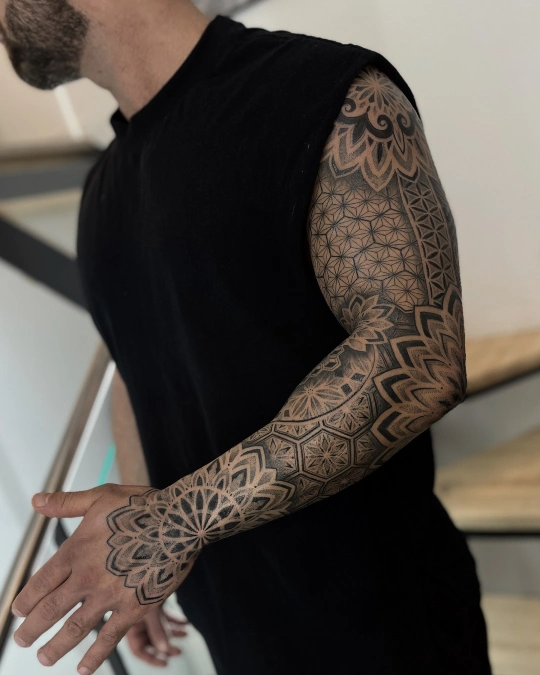
Repeating hexagonal grids interlock like a tightly woven textile across the bicep. Dense stipple shading softens those sharp, mathematical angles into a smooth gradient. Crisp mandala petals cap the design cleanly over the back of the hand.
Treat fine dotwork like a sheer fabric to soften heavy structural lines.
Wrapping strict shapes around curving muscle requires careful stencil placement to avoid warping the visual grid. This methodical approach works exceptionally well for anyone wanting a clean, architectural look instead of moody realism.
3. Dark Realism Skulls And Billowing Smoke
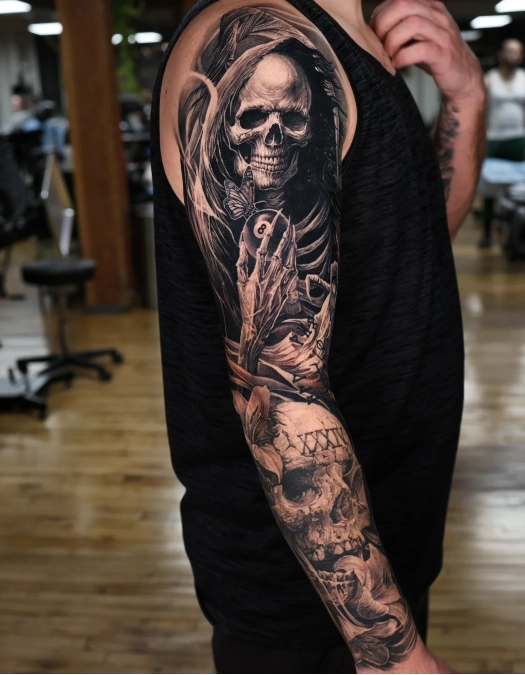
Deep, velvety black ink transitions sharply into stark bone-white highlights on the grim reaper. Hazy gray smoke softens the hard edges around the polished eight-ball and delicate butterfly wings.
Treat solid blackout areas like a dark accent wall to push lighter foreground subjects outward.
Balancing high-contrast macabre art requires an artist who truly understands light sources. This moody composition flatters wider shoulders because the prominent upper subjects pull the eye upward.
Why This Works
- Solid Background: Deep black negative space anchors the piece to keep intricate bone textures from feeling cluttered.
- Soft Transitions: Wispy smoke details blur the harsh borders between heavy ink and bare skin.
- Shape Contrast: The smooth, round eight-ball breaks up jagged skeletal lines to offer necessary visual relief.
4. Classical Antiquity And Linear Blueprinting
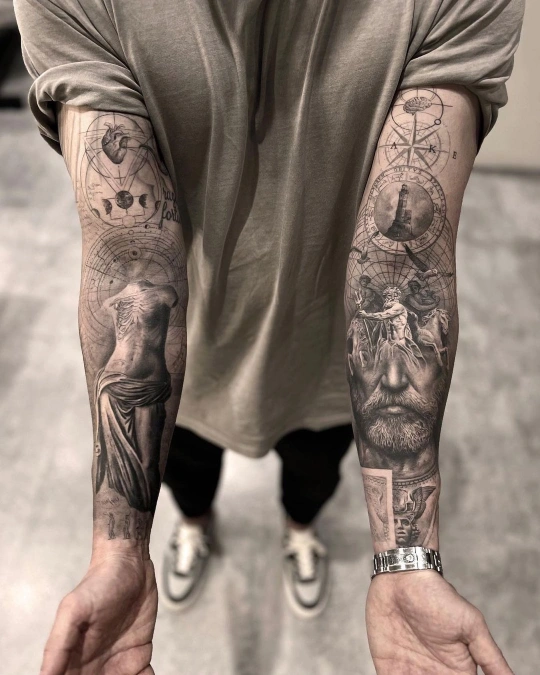
Crisp mathematical grid lines map across the skin like delicate drafting paper. Heavy stone textures on the Greek statues ground the airy geometric halos. Shaded cloth feels incredibly soft next to the harsh intersecting circles.
Mix heavily shaded focal points with thin wireframe backgrounds to prevent visual clutter.
Pairing dense realism with open line-art mirrors the impact of putting chunky furniture against a bare wall. The consistent drafting-board motif neatly ties the separate mythological elements together across both arms.
Quick Styling Tips
- Budget version: Outline the minimal geometric framework during your first session to space out the overall cost.
- Renter tip: Test complex architectural layouts using large temporary ink patches to check the placement before committing.
- Pro move: Request a highly diluted grey wash for the background grids to ensure the foreground figures jump out cleanly.
5. Bold Tribal Bands And Intricate Mandala Armor
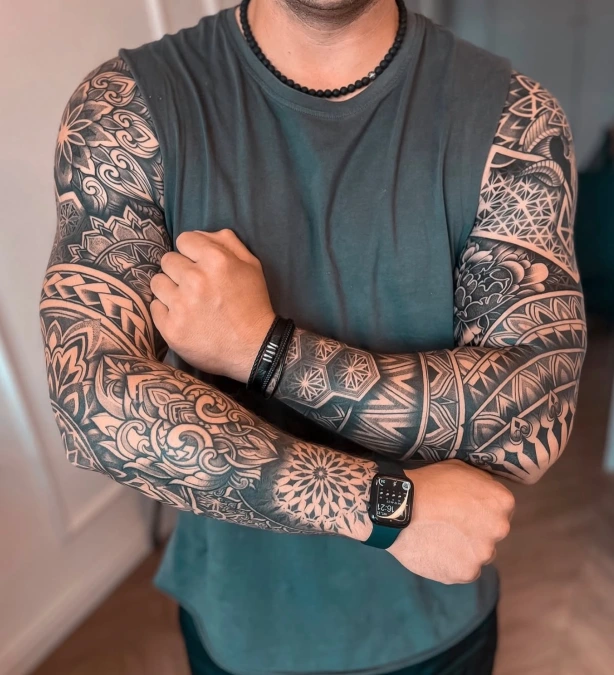
Thick, charcoal-black bands wrap tightly around the forearms like woven armor. Delicate stippled mandalas bloom outward from the elbows to soften the heavy geometric borders.
Use solid tribal cuffs to break up large sleeves into manageable, distinct visual zones.
This heavy blocking strategy flatters wider builds by highlighting the natural muscular shape of the arm. It allows you to mix entirely different dotwork patterns without them bleeding into a messy blur.
Quick Styling Tips
- Budget version: Outline the thick linework and heavy black bands first, then add the time-consuming dotwork gradients during future sessions.
- Renter tip: Wear full-arm compression sleeves printed with dense geometric blocks to test drive the heavy visual weight before getting tattooed.
- Pro move: Map the thickest horizontal bands directly over your elbow ditch and wrist joints to hide natural skin warping when you move your arms.
6. Deep Shadow Mythology And Warrior Portraits
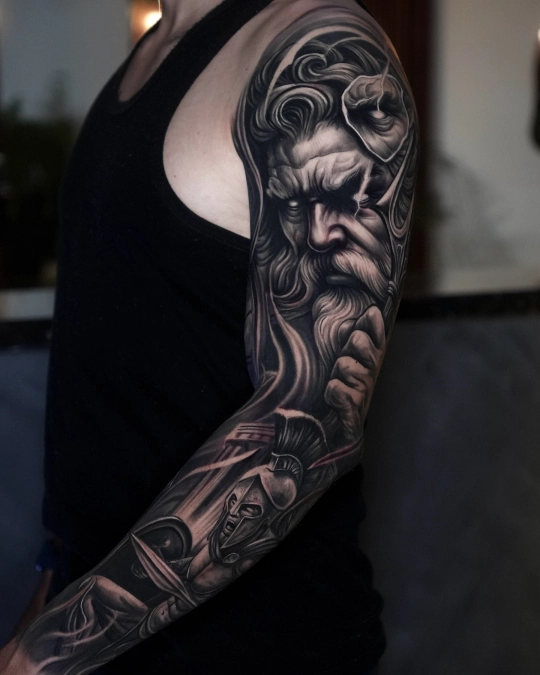
Heavy charcoal tones flood the upper arm to cast the bearded god in intense, dramatic shadow. Crisp highlights strike the Spartan helmet below like a sharp spotlight breaking through a dark room.
Treat heavy black backgrounds like blackout curtains to make your central figures command the space.
Pushing the darkest ink to the outer edges of the design forces the eye inward toward the detailed faces. This high-contrast method works incredibly well for broad shoulders because it creates a strong, framing silhouette.
7. Winged Astronaut And Celestial Star Maps
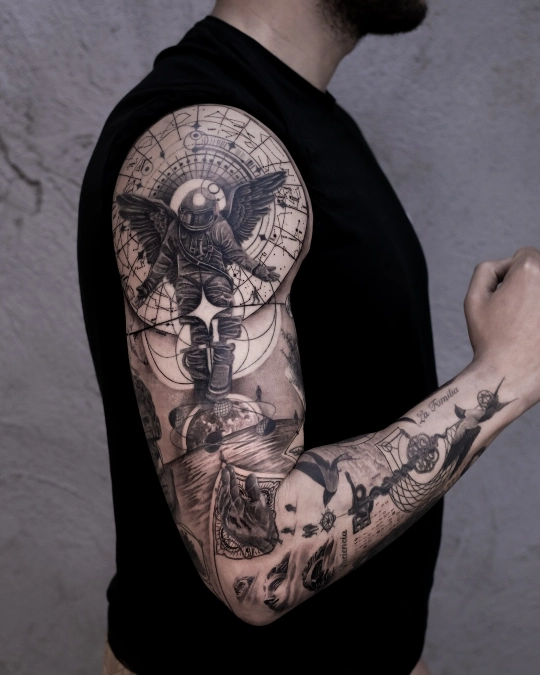
Crisp astrological grids frame a winged astronaut floating near the top of the shoulder. Soft grey shading gives the space suit a thick, protective texture against the bare skin.
Treat thin geometric frames like floating shelves to organize complex, unrelated subjects cleanly.
Mixing surreal sci-fi elements with classical angel wings requires a strong structural device to make visual sense. Linear star maps act as that necessary boundary, keeping the airy top half from bleeding into the denser landscape below.
Why This Partitioned Layout Works
- Structured Halos: Delicate line-work creates open negative space that clearly highlights the dark, heavily shaded helmet.
- Airy Filler: Small silhouette birds fill awkward gaps near the inner elbow without adding dense, heavy patches of ink.
- Central Light: The prominent glowing star acts as a primary illumination source to justify the deep shadows cast across the suit.
8. Framed Landscapes And Sketch Style Realism
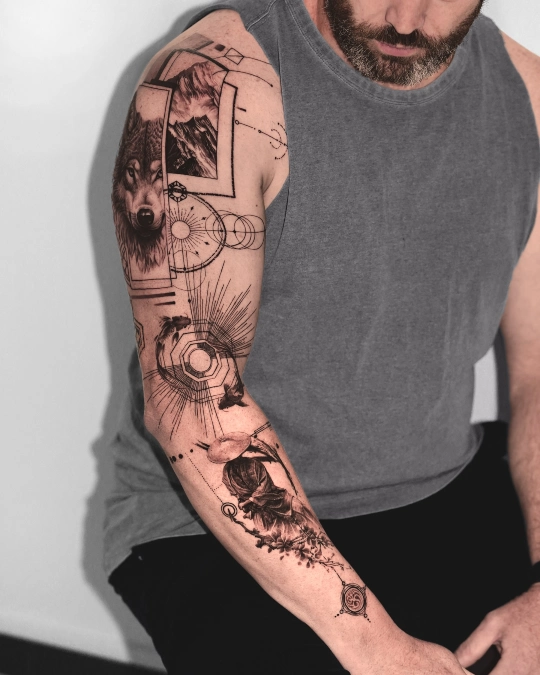
Thick geometric frames box in soft mountain peaks and a highly textured wolf portrait near the shoulder. Crisp, radiating lines drop down the forearm to surround two dark koi fish in open negative space.
Use stark rectangular borders like gallery frames to contain hyper-realistic animal portraits.
Mixing precise drafting lines with soft nature scenes creates a highly intentional, modern look. This fragmented layout flatters leaner arms because the horizontal boxes break up the long vertical length.
Why This Works
- Hard Borders: Rigid rectangular lines force the eye to focus sharply on the soft fur textures trapped inside them.
- Negative Space: Floating open lines provide necessary visual breathing room between the heavy, dense nature elements.
- Anchor Points: Small, dark silhouettes like the koi fish pull attention downward to balance the massive shoulder piece.
9. Abstract Brushstrokes And Dynamic Ink Splatter
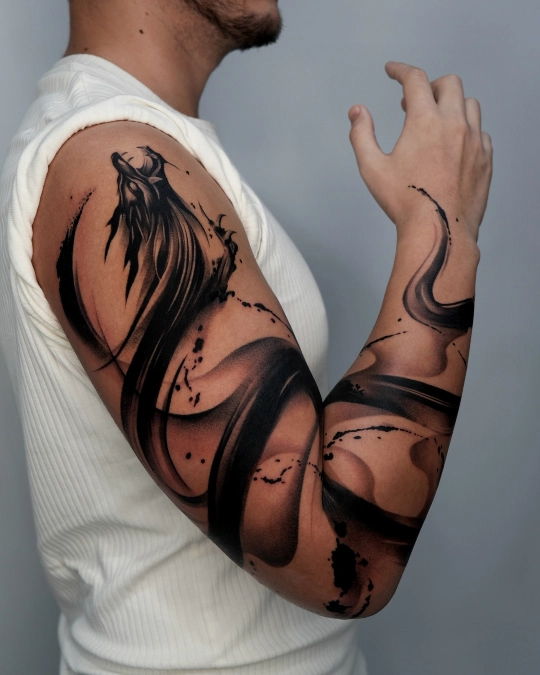
Thick, sweeping black lines slide down the arm like heavy velvet drapes. Sharp ink splatters break up the bare skin background with raw, unpolished energy. Soft gradient shadows sitting behind the solid black ribbons add a plush, airy depth.
Treat massive, organic swoops like oversized statement furniture that completely dictates the flow of your space.
Wrapping continuous, fluid shapes around natural curves requires an artist highly skilled in freehand placement. This dynamic method flatters lean limbs because the sweeping diagonal movements create an illusion of thicker width.
10. Traditional Japanese Water And Lush Chrysanthemum Elements
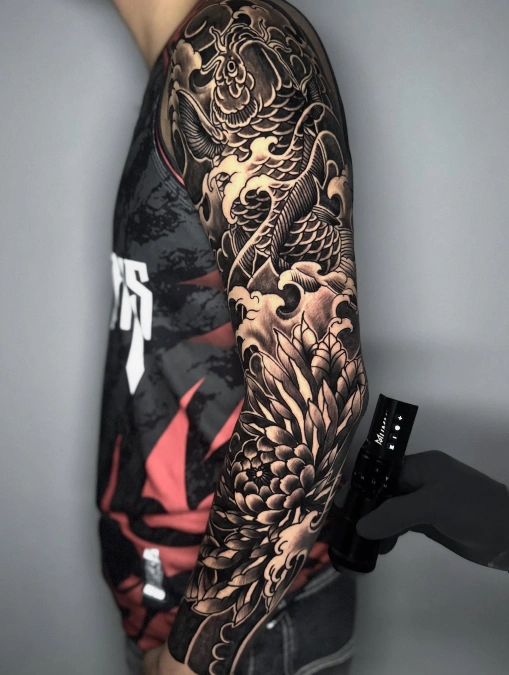
Dense black finger waves crash against crisp negative skin space to create high-contrast fluidity. Lush layered petals on the lower flower offer a soft texture against the rigid, armored scales of the koi fish above.
Treat highly patterned classic motifs like a bold botanical wallpaper that completely dictates the flow of the room.
Layering dense natural subjects requires distinct background textures to cleanly separate the active foreground elements. This heavily structured approach suits anyone looking for a cohesive, full-coverage sleeve rather than scattered patchwork pieces.
Quick Styling Tips
- Budget version: Outline the main fish and floral subjects first to break the massive project into manageable financial chunks.
- Renter tip: Wear a custom printed compression sleeve to test the intense visual weight of solid traditional backgrounds before booking your session.
- Pro move: Request thicker needle groupings for the primary linework so those large botanical edges stay incredibly sharp over decades.
11. Gothic Architecture And Sweeping Light Trails
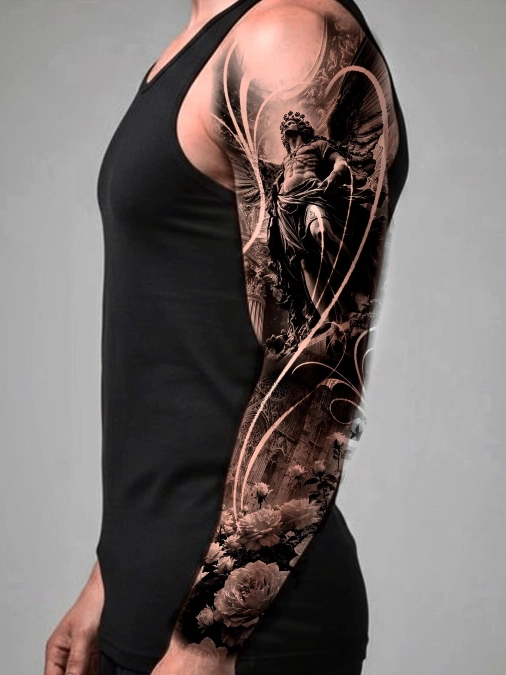
Crisp stone textures ground the mid-arm in deep, heavy shadow. Down near the wrist, plush floral petals bloom to offer a soft contrast against those rigid cathedral arches.
Treat sweeping negative space like dramatic spotlighting to guide the eye across a dark, crowded room.
Balancing dense realism requires an intentional visual break to keep the overall piece from looking muddy. These bright streaks function exactly like a sleek neon installation illuminating a moody, charcoal-painted hallway.
12. Etched Runes And Grounding Tree Silhouettes
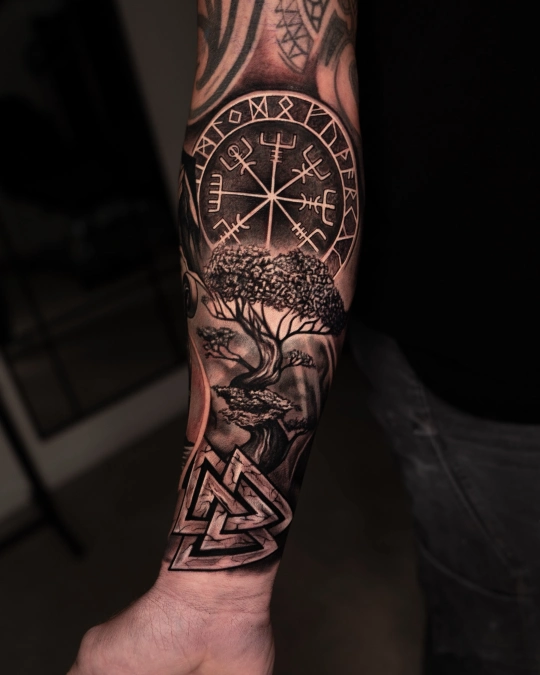
Crisp geometric lines carve out the ancient compass near the elbow. Soft stippling gives the gnarled tree leaves a plush, mossy texture right below it. Heavy shadows pool around the interlocking stone triangles sitting right at the wrist.
Anchor intricate linework using deep shadow patches to keep busy details from floating away.
Stacking distinct symbols vertically requires strong visual boundaries. This organized layout mimics arranging a tall bookshelf with heavy, solid objects placed at the base.
Why This Works
- Crisp borders: Sharp runic outlines clearly separate the dense top compass from the softer foliage below.
- Rooted base: The chunky stone texture at the wrist provides a heavy foundation for the entire vertical stack.
- Contrast pockets: Bare skin peeking through the geometric spokes prevents the dark background ink from feeling oppressive.
13. Chiseled Greek Statuary And Weathered Typography
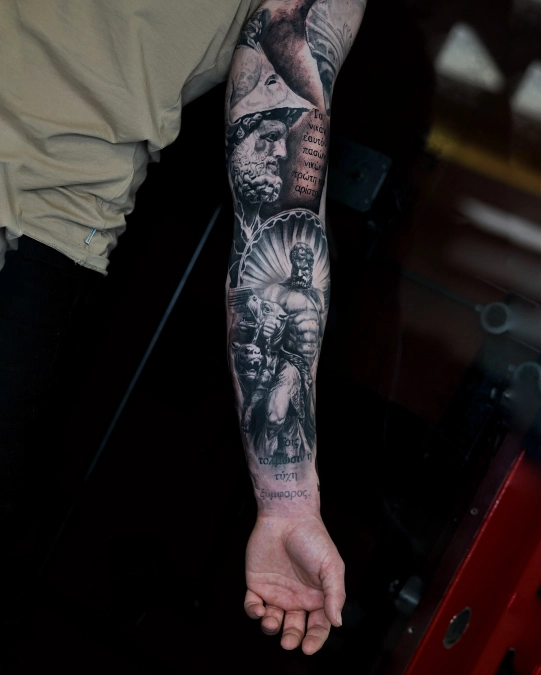
Crisp Greek lettering cuts cleanly through smooth, shaded background gradients. The highly textured faces of the ancient warriors look carved directly from heavy, solid marble.
Treat delicate script like decorative crown molding to elegantly frame heavy portrait work.
Mixing strict lettering with deep realism delivers the exact impact of hanging a minimalist typography print beside a moody oil painting. Slipping the text near the wrist and elbow allows the sweeping historical scenes to command the widest, flattest parts of the forearm.
Quick Styling Tips
- Budget version: Focus purely on the strong typographic elements and thick outlines first to establish the architectural framework on a smaller budget.
- Renter tip: Apply temporary ink transfers of complex historical texts to ensure the font size reads clearly from a distance before committing.
- Pro move: Request varying shades of grey wash for the script to make the words look genuinely weathered and carved into ancient stone.
14. Gothic Cathedral Spires And Fractured Linework
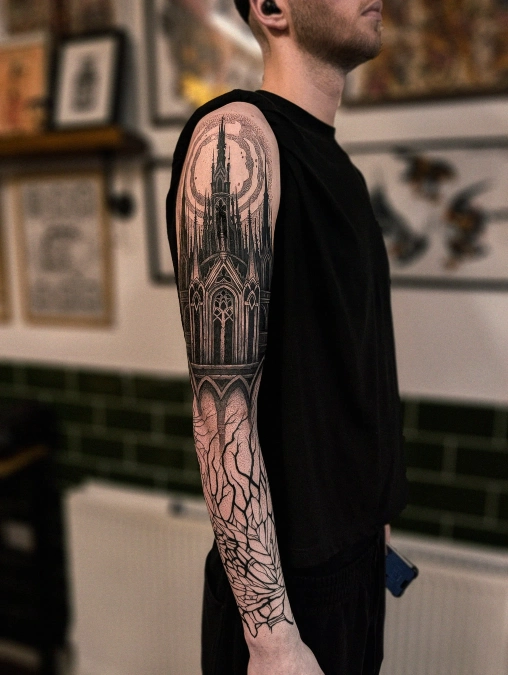
Dense black ink builds the towering cathedral spires across the upper bicep. Soft stippled circles glow behind the sharp rooftops like a pale night moon. Below the rigid stone arches, thick lines shatter down the forearm like cracked glass.
Treat jagged transitions like a distressed vintage rug to gently fade heavy structural designs into bare floors.
Grounding a massive architectural piece requires a deliberate exit strategy so the dark ink does not end abruptly. Fractured line-work provides a highly effective, airy fade down to the wrist.
15. Spartan Armor And Fractured Historical Architecture
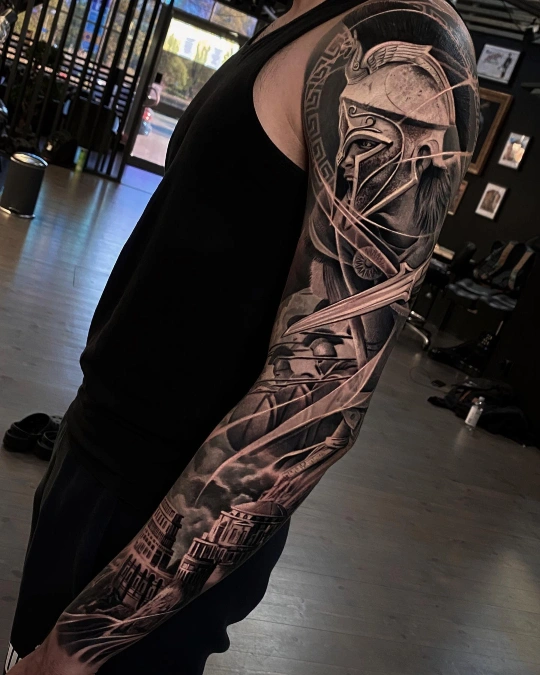
Heavy charcoal shading sculpts the warrior helmet near the top of the shoulder. Glowing streaks of bare skin slice violently through the dark background ink. Dense stonework anchors the ancient Colosseum directly at the wrist.
Treat aggressive negative space slashes like floor-to-ceiling windows to instantly open up a heavy, crowded layout.
Breaking up dense realism requires strong diagonal movement to keep the eye moving. This dynamic design mirrors the spatial flow of bridging two distinct zones, much like connecting an interior room directly to an open outdoor verandah.
Quick Styling Tips
- Budget version: Focus strictly on outlining the thick architectural structures first before paying for the time-consuming background shading.
- Renter tip: Map out the sharp diagonal slashes using temporary white ink to check how those lines warp when you bend your elbow.
- Pro move: Ask your artist to drop subtle dark drop-shadows immediately next to the bare skin streaks so the gaps pop much harder.
16. Sliced Astronaut And Minimalist Orbital Mechanics
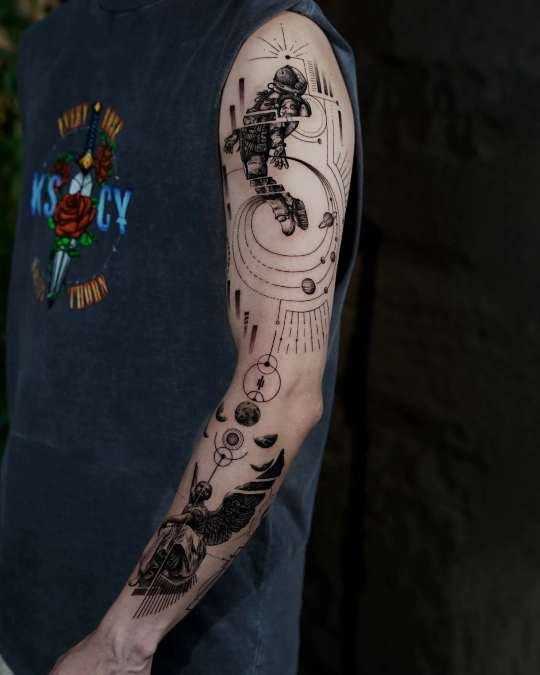
Crisp, segmented cuts slice horizontally through the dark spacesuit to create a striking glitch effect. Sweeping orbital lines circle the upper arm like delicate wire mobiles.
Treat vast amounts of bare skin like an open-concept floor plan to let highly detailed miniature pieces breathe.
Connecting dense portrait elements with razor-thin geometric tracks prevents the overall design from feeling heavily weighted at the bottom. This highly segmented approach works wonderfully for slender limbs because the sweeping circular paths add a strong illusion of structural width.
17. Fierce Samurai Mask And Soft Floral Framing
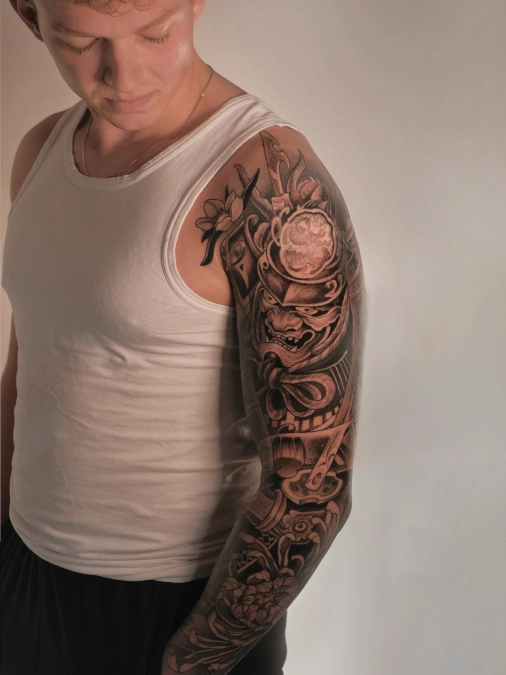
Smooth, polished armor plates contrast sharply against the highly textured woven rope. Deep charcoal shading gives the glaring mask incredible visual weight on the upper bicep.
Frame heavy, intimidating statement pieces with soft botanical elements to keep the overall layout balanced.
Mixing hard armor with organic nature mimics placing a massive iron sculpture beside a lush indoor plant. This high-contrast method flatters broad builds because it fills large areas without looking like a solid block of dark ink.
Why This Works
- Dense shading inside the helmet creates a striking illusion of hollow space.
- Woven rope textures offer a necessary visual break between the hard plates and surrounding shadows.
- Crisp negative space inside the top petals keeps the shoulder cap feeling airy.
18. Stormy Norse Mythology And Jagged Lightning Streaks
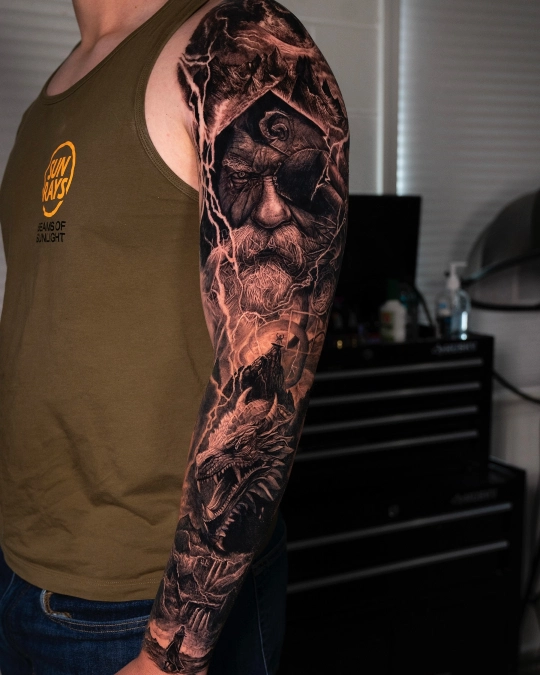
Glowing white lightning branches slice fiercely through the dark, moody thunderclouds. Deep charcoal shading carves rugged textures into the bearded face and rough mountain peaks.
Treat sharp lightning strikes like bright overhead track lighting to instantly cut through a dark, heavy space.
Connecting multiple massive subjects requires a strong structural element to prevent visual crowding. Bright energy paths guide the eye smoothly from the shoulder down to the wrist.
Why This Works
- Lightning strikes: Bright negative space provides necessary illumination to break up massive blocks of black ink.
- Stone borders: Rigid mountain textures create a natural framing device around the softer facial shading.
- Tiny silhouette: The small figure at the wrist establishes a massive sense of scale for the towering layout above.