
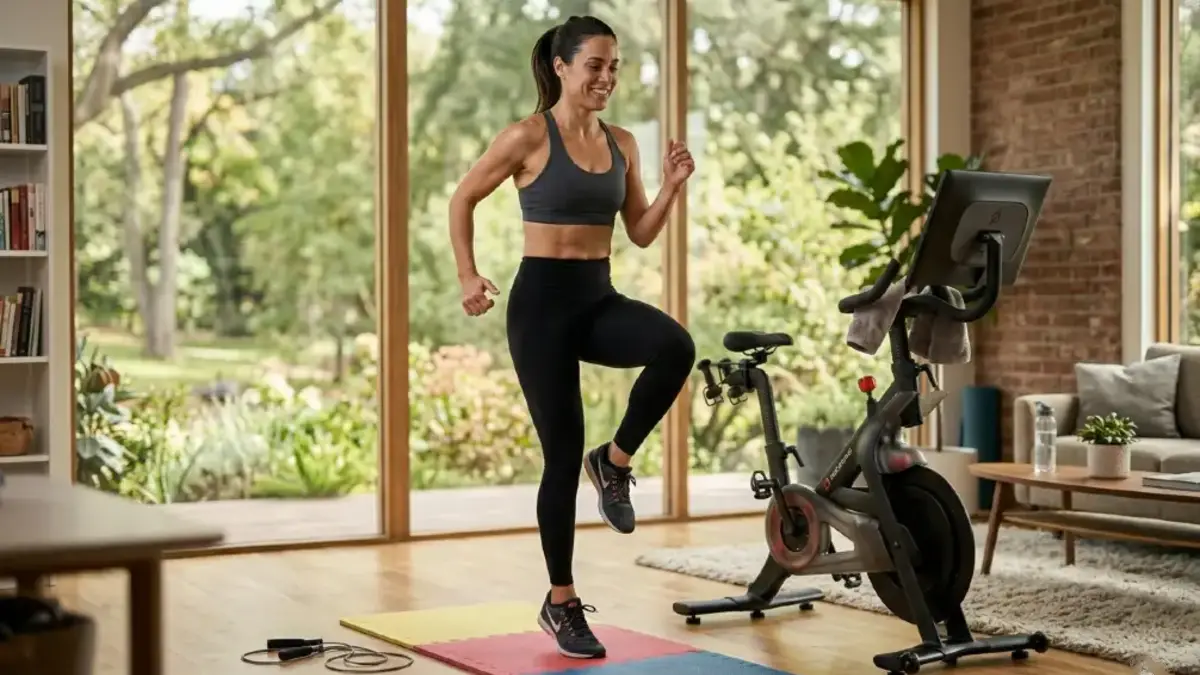
You look out the window and see pouring rain. You dread the idea of driving to a crowded gym. Here is the truth. You do not need a bulky and expensive treadmill collecting dust in your living room to build a world class aerobic engine.
Most people know they need 150 to 200 minutes of steady state cardio a week. But getting it done at home without standard gym equipment feels impossible. Sometimes it just feels incredibly boring.
That changes today. You are about to learn how to properly identify your aerobic threshold. You will also discover 10 highly effective and low impact ways to accumulate cardiovascular volume right in your living room.
What Actually Is Zone 2 Cardio? The Talk Test
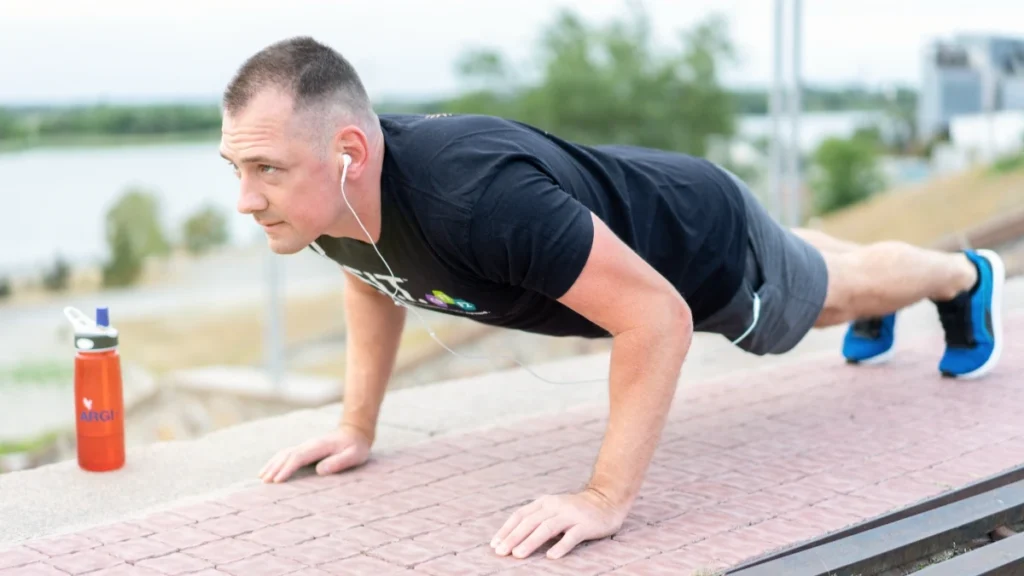
Think of your aerobic base like the foundation of a house. High intensity work is the roof. You need a wide foundation to support a big roof. Dr. Iñigo San Millán studies mitochondrial efficiency.
His research shows this specific intensity is the highest effort level where your body primarily burns fat for fuel. Your blood lactate stays under 2 mmol per liter.
You want to target 60% to 70% of your maximum heart rate. You can find a rough estimate of your maximum heart rate by taking 220 minus your age. Dr. Peter Attia points out a major flaw in how most people train.
People spend too much time in the garbage zone or Zone 3. They exercise too hard to get aerobic benefits. But they do not exercise hard enough to get anaerobic benefits.
Here is the easiest free metric to use. It is called the Talk Test. If you can easily sing a song, you are in Zone 1. If you can speak in full sentences but sound a bit strained, you are in Zone 2.
It should sound like you are walking briskly uphill. If you are gasping for air, you are in Zone 3 or higher. There are plenty of indoor Zone 2 exercises to keep you in that sweet spot.
1. The Continuous Low Impact Bodyweight Circuit
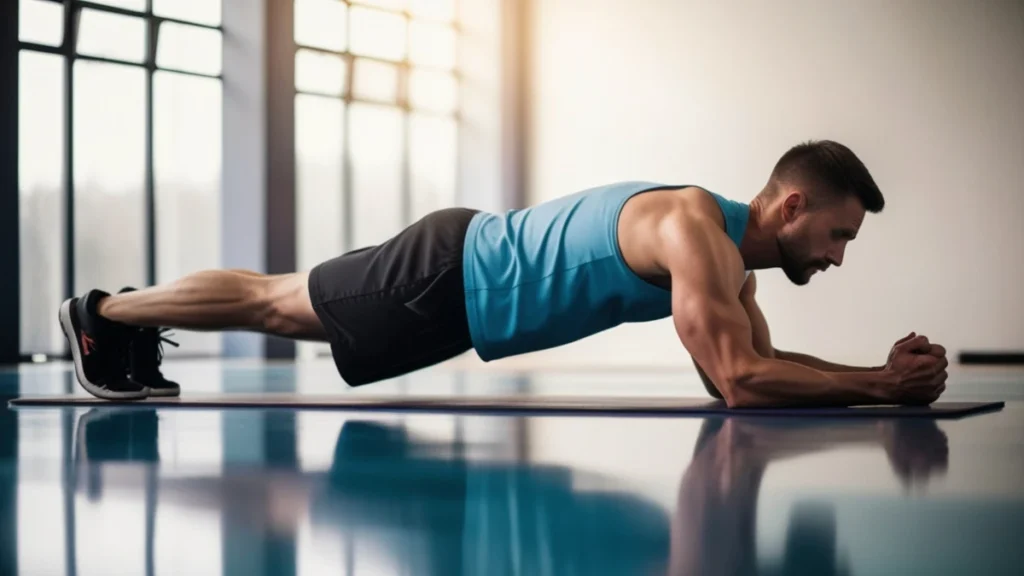
Bodyweight exercises often turn into a sweaty struggle. But you can use them for steady state aerobics if you pace yourself. This method relies on a continuous loop of movement. You keep your heart rate locked in at 60% to 70%.
Here is how to set up your home cardio without equipment.
Zone 2 Pro Tip: Move at a slow and steady pace. Do not push too hard. The most common mistake is accidentally turning a gentle circuit into a high intensity interval training session.
Gravity Grind
Bodyweight Squats
Drive through heels for 45 Seconds
Alternating Lunges
Stay upright for 45 Seconds
Shoulder Taps
Quadruped stability for 45 Seconds
Up & Down Planks
Core engagement for 45 Seconds
2. Heavy Rucking In Your Neighborhood Or Yard

Walking around the block is often too easy to hit your target heart rate. But adding a weighted backpack changes everything. This is called rucking. It elevates your heart rate instantly. It is a perfect way to get Zone 2 cardio at home without a treadmill.
Start by loading a sturdy backpack with 10% to 15% of your body weight. Walk at a brisk pace around your yard or neighborhood. The added resistance forces your cardiovascular system to work harder.
Zone 2 Pro Tip: Keep your posture upright. Check your breathing every few minutes. You should still be able to pass the Talk Test.
3. Stationary Cycling The Joint Friendly Standard
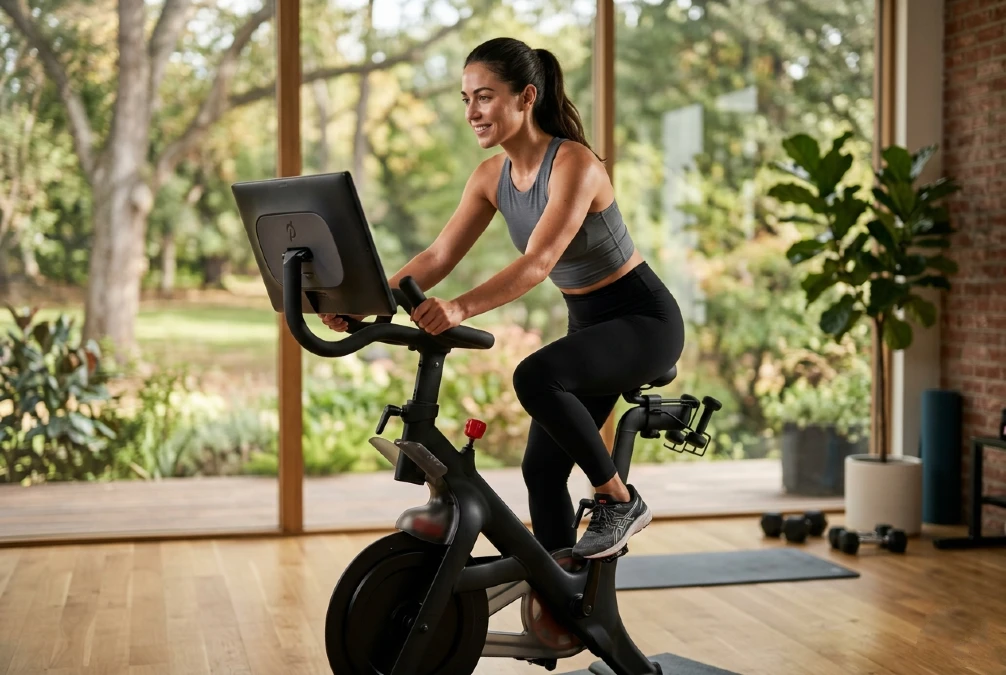
Cycling is the ultimate choice for hybrid athletes. It provides zero eccentric load on your muscles. This means it will not interfere with your leg day recovery. Studies show cycling produces less muscle protein breakdown than running. It also causes less acute inflammation.
Because cycling removes joint impact, it is perfect for active recovery. Set up your indoor bike and find a comfortable resistance. Keep your pedaling cadence steady.
Zone 2 Pro Tip: Use a chest strap heart rate monitor like the Polar H10 or a smartwatch. These indoor Zone 2 exercises are much easier to track when you have live data right in front of you.
4. The Kettlebell Carry And Flow
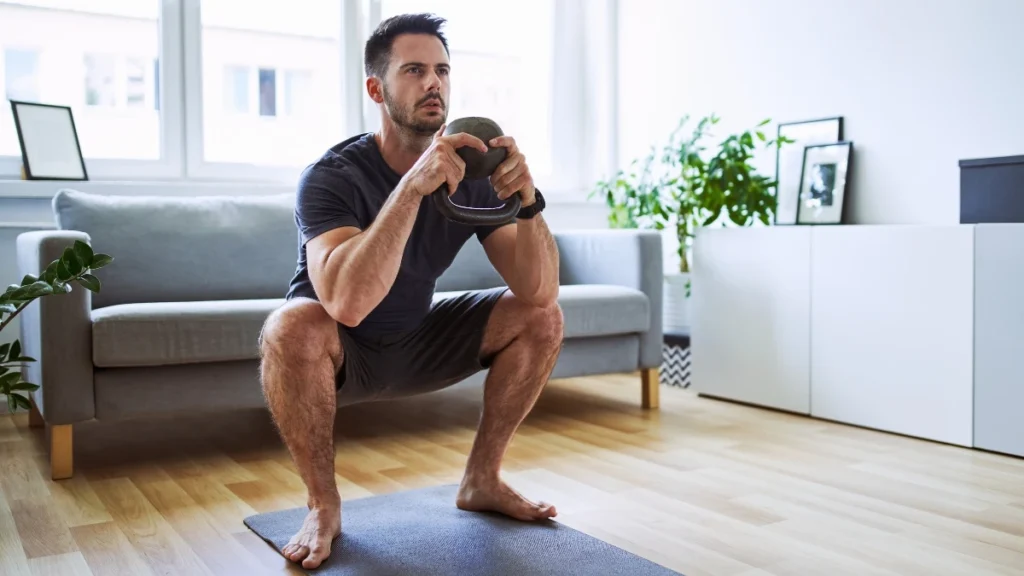
You can get a massive aerobic benefit from a single piece of iron. The kettlebell carry and flow is a fantastic option for home cardio without equipment taking up much space. You link different movements together without putting the bell down.
Start with a farmer carry across the room. Transition into slow kettlebell swings. Move smoothly into light goblet squats. Keep your Rate of Perceived Exertion at 3 or 4 out of 10.
Zone 2 Pro Tip: Focus on your nasal breathing. If you are forced to breathe out of your mouth heavily, you are slipping into Zone 3 or 4. Put the weight down and rest.
5. Stair Climbing Or Step Up Variations

You probably have a great cardio machine built right into your house. A household staircase is incredibly effective. You can also use a sturdy plyo box. Step up and down continuously at a rhythmic pace.
This provides moderate intensity steady state at home. A 30 minute step session can burn roughly 200 to 300 calories. It keeps you perfectly in the aerobic zone.
Zone 2 Pro Tip: Alternate your leading leg every five minutes. This prevents fatigue from building up in just one side of your body.
Step-Up Synergy
Flat-Foot Contact
Plant your entire foot on the step to engage glutes and protect your knees.
Tempo Regulation
Maintain a mechanical rhythm to keep your heart rate perfectly in Zone 2.
Stability Support
Keep a hand on the railing to ensure a smooth, continuous flow without micro-breaks.
Height Adjustment
Switch step heights if you fail the Talk Test to tailor the intensity.
6. Indoor Rowing For Full Body Aerobics
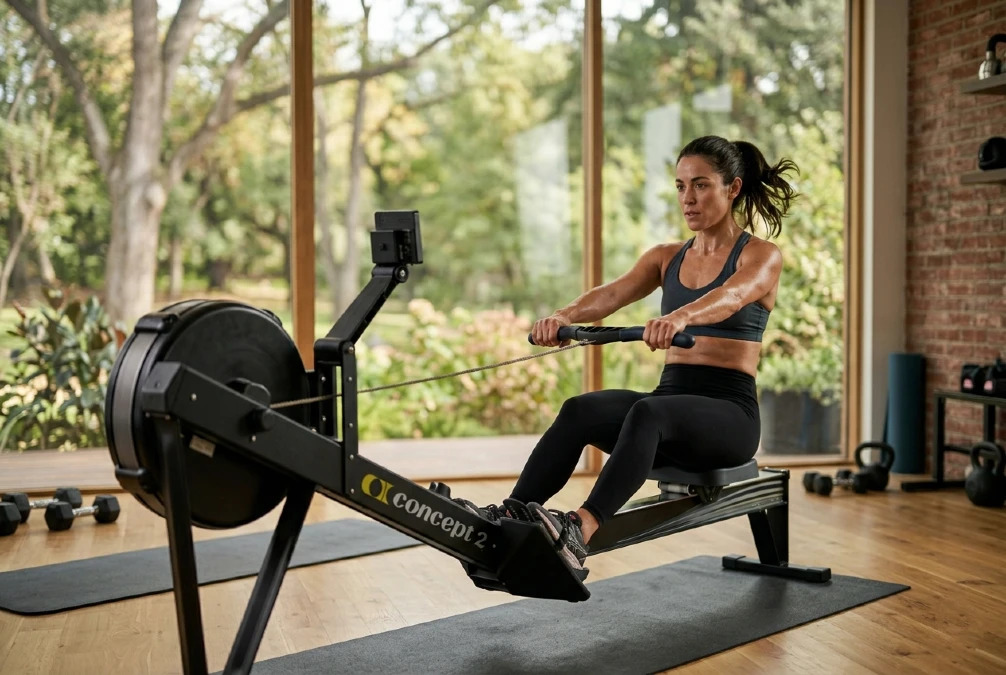
Rowing is a powerhouse movement. It engages 86% of the muscles in your body. A machine like the Concept2 Rower is one of the best tools for indoor Zone 2 exercises. But you have to control your pace.
Adjust the damper to a low setting like 3 or 4. Keep your stroke rate between 18 and 22 strokes per minute. Aim for a pace that is 45 to 60 seconds slower per 500 meters than your best 2 kilometer test pace.
Zone 2 Pro Tip: Focus on pushing with your legs rather than pulling with your arms. The leg drive is what builds the aerobic base.
7. Sustained Shadowboxing

You do not need a heavy bag to get a great workout. Shadowboxing involves throwing light and continuous combinations while moving around your living room. Focus on your footwork and total volume. Do not worry about speed and power.
This is an engaging form of home cardio without equipment. If bodyweight shadowboxing is too easy, hold 1 or 2 pound hand weights. This will slightly elevate your heart rate.
Zone 2 Pro Tip: Keep your hands loose and your shoulders relaxed. Tense muscles will spike your heart rate and push you out of the target zone.
8. Rebounding On A Mini Trampoline
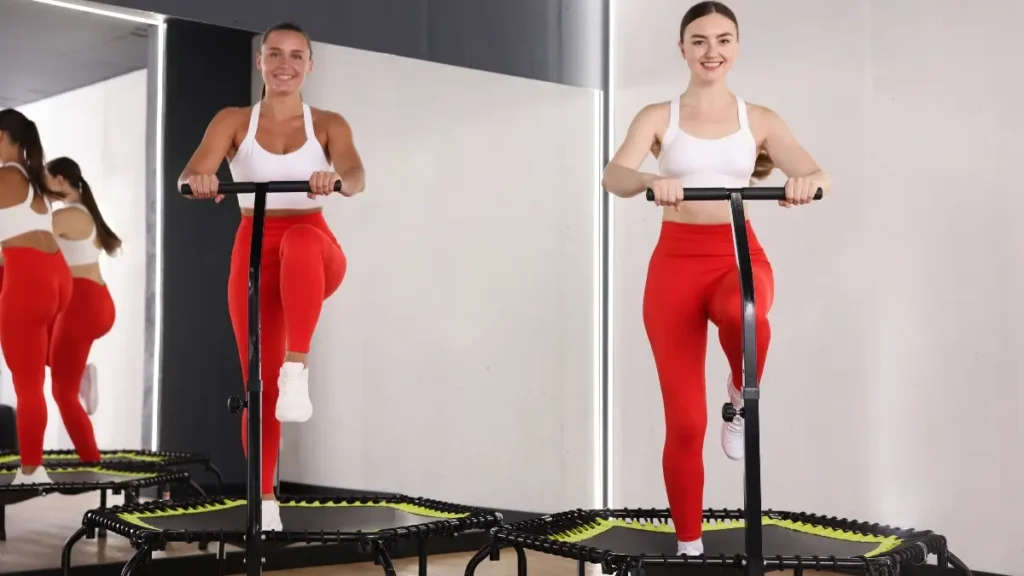
Jumping on a mini trampoline is called rebounding. It is very low impact on your joints. It provides excellent lymphatic drainage. It is also surprisingly effective for maintaining a steady 120 to 135 BPM.
Rebounding reduces impact stress on your lower limbs by up to 80% compared to hard surface running. It is a fun way to get moderate intensity steady state at home.
Zone 2 Pro Tip: Do not jump as high as you can. Focus on pressing down into the mat with a rapid and shallow bounce.
9. The Boxer Skip Jump Rope

A standard jump rope routine often pushes people straight into Zone 4. It simply requires too much effort to maintain. But the boxer skip changes the game. This technique involves alternating your weight from foot to foot.
It allows for a slower and sustainable rhythm. Treat it like a moving meditation. Aim for continuous blocks of 10 minutes. This is one of the most classic indoor Zone 2 exercises.
Zone 2 Pro Tip: Stay light on your feet. You barely need to leave the ground to clear the rope.
10. VR Fitness And Immersive Workouts
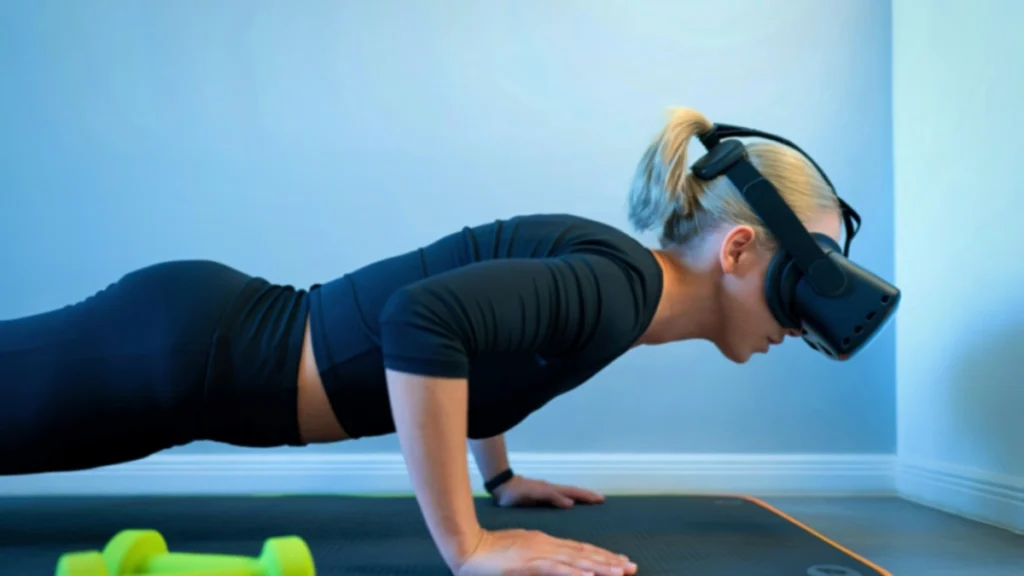
Technology makes cardio incredibly fun. Virtual reality gaming tricks your brain into exercising for 45 minutes seamlessly. Games like Supernatural or Beat Saber on lower difficulties are perfect for this.
In 2026, VR fitness apps feature specific heart rate monitored endurance modes. They dynamically adjust the game speed to keep you right in the correct effort level. It is a fantastic way to get your Zone 2 cardio at home without a treadmill.
Zone 2 Pro Tip: Use a silicone cover for your VR headset. Sweating for 45 minutes can ruin the foam padding.
Cyber-Pulse Endurance
Dynamic Pace Control
Software automatically adjusts rhythm to keep you in your 60% to 70% Max HR.
Reduced Perceived Exertion
Immersive worlds trick the brain, making 45 to 60 minute sessions feel effortless.
Low Impact Movement
Flowing arm movements and lunges provide cardio without the joint stress of running.
Total Accessibility
Go from couch to cardio in two minutes, hitting your weekly 200-minute target easily.
Conclusion
Building a powerful aerobic base does not require a massive machine. You just need sustained and moderate intensity effort for 30 to 60 minutes at a time. The real secret is finding a method you actually enjoy. Consistency beats perfection every single time.
Pick one method from this list this week. Aim to complete three 45 minute sessions. Getting your Zone 2 cardio at home without a treadmill is entirely possible. You just need to start moving.